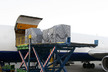
Emirates SkyCargo will add two weekly freighter services to India in March 2026, increasing available capacity by around 3,000 tons per week across the market.
The carrier currently operates three weekly freighters to India, including one to Mumbai and two to Ahmedabad, alongside bellyhold capacity on 167 passenger flights serving nine Indian gateways. A new Dubai–Singapore–Mumbai service will launch on March 4, while a direct Dubai–Ahmedabad freighter will also begin operations in March. From April 2026, a weekly freighter service to Dhaka, Bangladesh, will be introduced.
The new services are expected to carry pharmaceuticals, fresh fruits and vegetables, other perishables, and electronic devices. Existing weekly volumes include around 600 tons of pharmaceuticals and 500 tons of perishables, in addition to garments, textiles, and electronics.
The expansion follows increased trade flows under the UAE–India Comprehensive Economic Partnership Agreement, which has supported export growth between the two markets.
Perishable cargo, including fruits and vegetables, requires time-sensitive handling and temperature-controlled logistics. Pharmaceutical shipments also require controlled environments, while electronics and garments are transported in palletised or secured formats.
In addition to air capacity, Emirates SkyCargo has expanded its road feeder network across India. In 2025, more than 1,000 trucks transported close to 5,500 tons of cargo, including automotive parts, machinery, spices, and other goods. Temperature-controlled trucks are used for pharmaceutical and medical shipments.
The network has been extended to include Coimbatore and Goa as offline stations. This provides access to export markets for manufacturing and agricultural regions through integration with freighter and feeder services.
The carrier's Indian network includes Ahmedabad, Bengaluru, Chennai, Delhi, Hyderabad, Kochi, Kolkata, Mumbai, and Thiruvananthapuram. Since operations began in Mumbai and Delhi in 1985, the network has expanded to support cargo flows between domestic production areas and international markets.
Increased freighter frequency may reduce transit times for perishable shipments and support export planning. Direct services from Ahmedabad provide additional routing options for exporters in western India, while the Dhaka connection supports regional distribution in South Asia.
The increase in pharma and perishable volumes requires attention to cold chain management, documentation, and handling processes to maintain product quality during transit.
Source: GetTransport