It has been a particularly eventful season for Spanish lemons. With repeated storms, record rainfall, gusty winds, and temperature variations, production conditions were particularly difficult. The unprecedented weather conditions caused major disruption to the campaign, forcing operators to show resilience and redouble their efforts to maintain quality and supply to the market.
 © Ets Meseguer
Extreme weather conditions causing up to 40% losses in orchards
"Since December, we have had eleven storms. Directly or indirectly, most orchards have been affected," explains Benoît Maillard-Guillon of Ets Meseguer. "The rainfall was such that the soil, unable to absorb all the water in such a short amount of time, became completely saturated. The plots being impassable, growers were simply unable to enter the orchards for several days. The excess water also caused root asphyxia in some trees."
In addition, strong gusts of wind caused many lemons to fall. As for the fruit that remained on the trees, many were weakened by impacts with the thorny branches of the lemon trees, resulting in bruising and damage sometimes invisible to the naked eye. According to Benoît Maillard-Guillon, "depending on the orchard, we estimate losses of between 30 and 40% directly on the plots. These losses are accentuated by the very biology of lemon trees. "There are three stages of development on the same tree: the flower, the young fruit, and the ripe fruit. During windy spells, the flower may fall, preventing the formation of new fruit. Ripe lemons also drop. In the end, only some of the ripening fruit remain usable, provided they have not been damaged by the shocks."
Increased efforts to preserve quality
Faced with these extreme conditions, the teams have had to adapt their working methods and considerably step up quality controls. "An initial selection was made directly in the orchard at the time of picking, followed by a second selection at the station. To ensure the most stable quality possible, we kept the fruit in cold storage for three or four days to observe its development," explains Benoît Maillard-Guillon.
Imaging technologies capable of analyzing the fruit were also mobilized, while the workforce was strengthened by doubling the number of staff on certain sorting lines. "Despite all these efforts, some microcracks are still impossible to detect with the naked eye and can reduce the fruit's shelf life. To date, there are still around ten days left in the campaign for the Primafiore variety. We will follow this up with the Verna variety, which is more robust and therefore less affected by the weather. However, we already know that volumes have been affected."
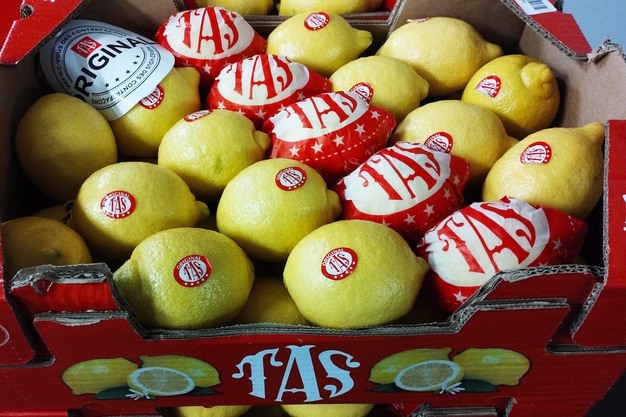
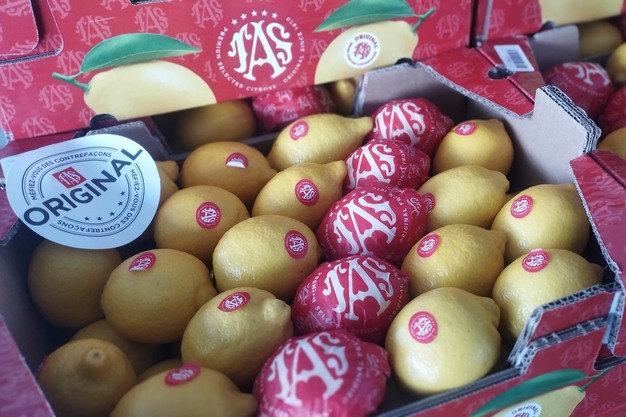
This is a particularly complicated context for the lemon sector, but it has allowed the company to prove itself once again. "Our efforts have enabled us to keep quality problems to a minimum and ensure continuity of supply. We are distributors of brands with a strong image. Whatever the production conditions, our priority remains quality," explains Benoît Maillard-Guillon.
 © Ets Meseguer
A complicated season for the market
These production difficulties were compounded by a tricky trading climate. The weeks surrounding the festive season were particularly sensitive for the sector. "At Christmas, lemons are a popular accompaniment to seafood consumption. But there is a psychological price that consumers should not go over," stresses Benoît Maillard-Guillon.
Operators have therefore had to strike a balance between increased production costs due to bad weather and market constraints. "There was demand, but we had to find a balance between production costs and prices that were acceptable to consumers."
All in all, this has been a very complicated season. Nevertheless, the resilience and adaptability of our teams have enabled us to remain present on the market with quality products. "The costs incurred were significant, and the situation demanded a great deal of adaptation and effort from us, but once again we demonstrated to our clients that we could guarantee quality fruit, even in extreme conditions."
For more information:
Ets Meseguer
Benoît Maillard-Guillon
Phone: +33 146 864 170
[email protected]
www.etsmeseguer.fr