Chile's blueberry sector is not in decline, but in transition. Across all production regions, traditional varieties are being replaced with newer genetics, production systems are becoming more intensive, and long-term competitiveness is a key focus.
This shift is driven by a changing global market. Growers are no longer competing only with neighboring regions, but with production across Latin America, Africa, Europe, and Asia. Quality is now the baseline. Success is increasingly defined by consistency, shelf life, flavor, fruit size, and resilience throughout the supply chain.
 © Global Plant Genetics
Genetics as a strategic decision
Varietal choice has become central to commercial sustainability. Genetics is no longer only an agronomic input but also a strategic business decision.
Replanting is already underway, with growers selecting varieties that can perform under changing climatic conditions. Former high-chill zones are being reclassified as mid- or low-chill areas, while heat tolerance and seasonal stability are becoming important traits.
On the ground with Chilean partners
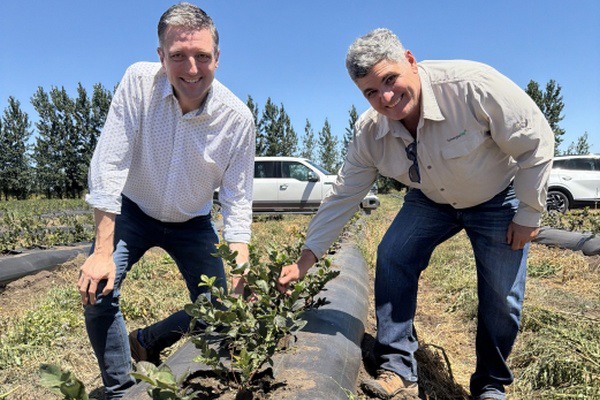
During the visit, GPG met with its licensed blueberry partners in Chile: SynergiaBio, Viveros Hijuelas, and Viveros Sunnyridge. These partners are involved in trialling, propagating, and commercializing next-generation genetics.
Many newer low-chill varieties are showing rapid establishment and early productivity. The varietal transition is already taking place in commercial production.
A global breeding perspective
GPG's blueberry portfolio is developed through breeding partnerships with Oregon Blueberry and the University of Georgia. These programs support growers across a range of production environments, from low-chill to high-chill regions.
In Chile, this approach is relevant due to the country's geographic range. Production requires genetics that can perform across multiple climates and production systems while meeting export market requirements.
Looking ahead
Over the next five to ten years, Chilean blueberry production is expected to become more consolidated and structured. Larger production areas, larger average field sizes, and longer production windows are expected.
Future competitiveness will depend on fruit quality, stable production performance, lower input costs, and post-harvest resilience within international supply chains.
 © Global Plant GeneticsFor more information:
Global Plant Genetics
Tel: +44 (0) 1485 210091
Email: [email protected]
www.globalplantgenetics.com