Blueberry harvests are subject to one of the most demanding supply chains in fresh produce, says Sukhdeep Sethi, managing director of packaging manufacturer AVI Global Plast: "After harvesting, berries must be kept cool, packaged, and shipped using temperature-controlled logistics for optimal distribution. Packaging therefore needs to protect delicate fruit while also using transport space as efficiently as possible. Yet once conventional, clamshell rPET-punnets are filled and stacked into cartons, significant gaps remain between packs. Industry estimates suggest that in many palletized shipments close to half of the available transport space can consist of empty air rather than fruit."
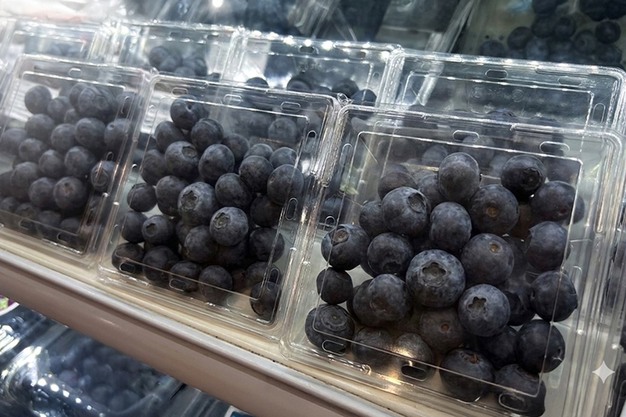
"This inefficiency largely stems from the design of traditional containers," Sethi continues. "Most punnets are tapered, so that empty packs can nest together when transported from packaging factories to packhouses. Once fruit is packed inside them, the same geometry leaves voids between containers when cartons are stacked on pallets. For exporters moving blueberries across long distances, these gaps reduce pallet efficiency and increase the total volume that must be transported and stored in refrigerated logistics systems."
 © AVI Global Plast Pvt. Ltd.
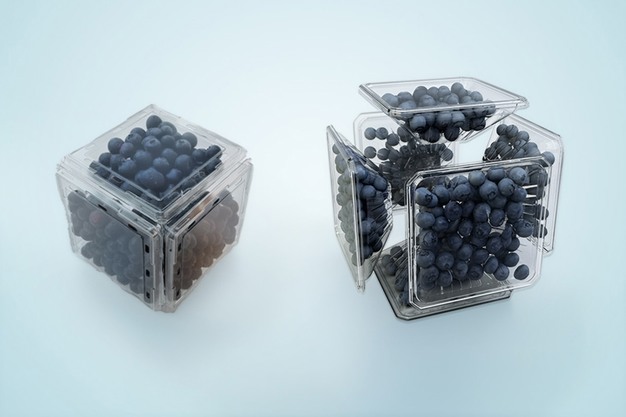
To solve this problem, AVI now introduces a new space-saving packaging system in India, Sethi explains: "The Q-Bic packaging concept, developed by Smart Packaging Industries, addresses the issue by rethinking how containers combine once they are filled and prepared for shipment. Instead of functioning purely as individual packs, the trays form part of a geometric structure, in which multiple units combine into compact cube formations. These cube units can then be stacked tightly inside cartons, reducing the empty space normally seen between conventional punnets."
The impact becomes clearer when pallet density is considered, Sethi states. "Trials in commercial blueberry packing programs indicate that cube-based palletization can allow for approximately double the number of packs per pallet compared with conventional clamshell formats. In practical export logistics, this means that a large share of the 'shipping of air' typically present in conventional punnet pallets can be eliminated, often reducing pallet movements and refrigerated logistics volume by around 50%."
Sethi adds that in addition to logistics efficiency, the cube-based structure also enables reductions in packaging materials across the supply chain: "The improved structural geometry allows optimization of the consumer pack (C-pack) in rPET, while the tighter pallet configuration reduces the amount of corrugated cardboard required for secondary packaging and distribution cases, with reductions of up to 59% in corrugated board usage observed in 125g blueberry formats."
"The rPET clamshell punnets incorporate ventilation channels that allow airflow through palletized packs, supporting cooling performance during storage and shipment," Sethi goes on. "Structural stability is another factor influencing fruit protection. Standard plastic punnets often take stacking stress on their top lid or rim. As a result, they can be damaged by compression due to uneven loads during transport. Combining rPET clamshell punnets together in cube formations distributes loads across a larger structural framework. The cube geometry transfers forces across three axes and six directions within the structure, rather than concentrating compression on the lid or rim of individual packs. This helps stabilize pallet stacks while decreasing the likelihood of damaged berries."
 © AVI Global Plast Pvt. Ltd.
According to Sethi, higher packing densities also affect how products move through the distribution chain. "Each pallet holds more product than before; therefore, fewer pallets travel through packing plants, cold storage facilities, and distribution centers. This reduces the number of loading and unloading processes necessary in the supply chain. In large blueberry export programs, improvements in pallet utilization have been associated with logistics and storage reductions of around 50%, reflecting the more efficient movement of fruit through refrigerated distribution systems."
Transport efficiency is closely linked to the environmental footprint of fresh produce distribution, Sethi emphasizes. "Refrigerated transport and cold storage account for a substantial share of emissions in global produce supply chains. By combining higher pallet density with lower material consumption in both rPET consumer packs and corrugated distribution cases, the overall packaging and logistics system becomes significantly more resource efficient. Industry assessments suggest that improvements in packing efficiency and material reduction at this scale can contribute to emission reductions exceeding 40% in packaging and transport operations."
For more information:
Sukhdeep Sethi
AVI Global Plast
[email protected]
https://avigloplast.com