A small domestic irritation led Natural Branding Australia's Adam Chrimes to question a long-standing feature of the produce aisle: the sticker.
"I'm continually peeling the stickers off all the fruit and vegetables and sticking them to the outside of my bin," says Chrimes. "My partner kept getting annoyed with me about all of that, so I was thinking to myself, why don't I get rid of the stickers completely?"
 © Press Run/Miriam Deliva
The idea that followed was simple: remove the label entirely and put the information directly onto the fruit itself. Chrimes, who works with laser technology in the semiconductor and medical sectors, decided to experiment.
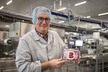
"I took my lunch to work one day, put it under a laser, and it came up really nice," he says. "I thought this actually looks like it could be something real."
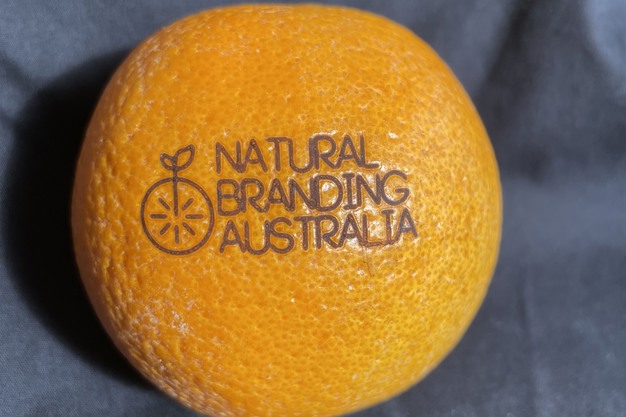
That experiment led to the concept now being developed by the team at Natural Branding Australia: laser branding that etches product information directly onto the skin of fruit instead of applying adhesive labels.
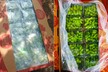
The system leaves a visible mark without altering the fruit itself. "For some fruits we char the outside slightly, like oranges, which gives that nice black mark," Chrimes says. "Others, like plums, the laser simply vaporises the pigment out of the skin so the writing shows up bright white."
 © Natural Branding Australia/Dr. Adam Chrimes
Crucially, he says, the process does not affect the fruit's internal composition or eating quality. "The rest of the skin is still intact," Chrimes says. "In taste, it's absolutely no different."
Early trials focused on fruit with skins that are normally discarded, such as oranges and avocados, partly to remove consumer hesitation about the concept.
"We deliberately started with fruits where you peel the skin off," he says. "That way you remove the whole idea that you need to eat something that's been lasered."
More recent trials have expanded into stone fruit, including nectarines, peaches, and plums. "Those are fruits where you eat the skin, so it was interesting to hear the feedback," Chrimes says.
Fruit from those trials was sent through the Melbourne wholesale market for industry feedback. "Most of the people we work with sell through the wholesale market," he says. "So the key question for growers is simple: how does it sell?"
Cost is equally critical. Chrimes says the model is designed to mirror the economics growers already understand.
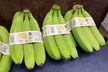
"At the moment, packhouses lease label applicators and buy minimum order quantities of stickers," he says. "They're paying both a consumable cost per sticker and a lease cost for the hardware."
 © Natural Branding Australia/Dr. Adam Chrimes
In the first instance, Natural Branding Australia intends to replicate that structure. "Our proposal is essentially the same model," Chrimes says. "You could buy or lease the equipment and operate it in a similar way, so in theory the total cost should be comparable to what they're already paying."
That cost neutrality has helped attract interest from citrus growers, where the technology is already moving beyond small-scale trials.
"People are selling citrus with branded skins in limited quantities while they assess the effect on their sales," he says. "And we're about to sign a few more citrus growers around this region, so it's definitely moving commercially."
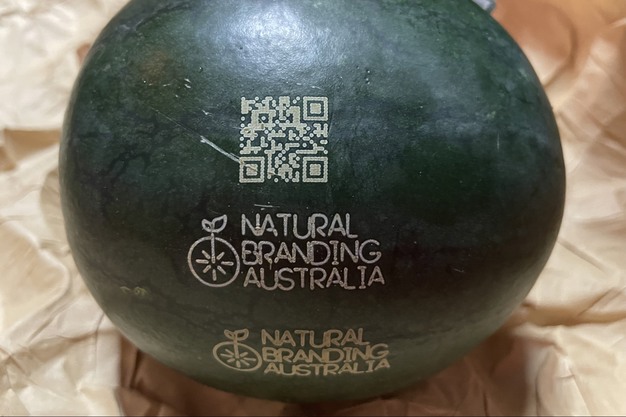
Beyond replacing stickers, Chrimes says the system opens new possibilities for branding and traceability. The laser can produce larger marks than conventional labels and potentially embed QR codes.
"That's certainly a future we've envisaged," he says. "You could scan the fruit and see exactly where it came from — a farm in Queensland, when it was picked, that kind of information."
Permanent markings also strengthen traceability along the supply chain. "If you can uniquely identify the fruit, you've got that chain mapped out," Chrimes says. "The permanence helps with traceability and reduces the risk of counterfeiting."
Another very sought-after characteristic, especially prominent in Asian markets, is to have the country of origin on the fruit. Australia has a strong brand reputation for high-quality fruit. Protecting that reputation by deterring counterfeits can also create a point of difference. A label is easy to replicate; a laser marking is much harder.
The technology is currently part of the accelerator program run by Hort Innovation, which Chrimes says will help advance industry education and formal studies around the technology.
"From this program, we hope to generate the equivalent Australia-specific documentation, similar to that of the FDA or ISO documentation, to support the efficacy of laser branding onto fruit."
For more information:
Adam Chrimes
Natural Branding Australia
Tel: +61 400 771 703
[email protected]
www.naturalbranding.com.au