Exporters Western Cape (EWC), which promotes and supports exporters in the province, is warning that the conflict in the Middle East is creating uncertainty, especially for those South African exporters serving the region's fast-growing fresh produce markets.
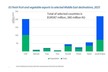
The region, and the United Arab Emirates in particular, has emerged as a growing market for Western Cape fruit exports.
"As tensions escalate in the Middle East, we are already seeing the knock-on effects locally through increasing fuel prices," EWC chairperson Terry Gale said in a statement.
"For exporters operating on tight margins, particularly in the agricultural sector, these cost increases are immediately felt."
The operational impact was already affecting cargo destined for the region, with Gale reporting that several shipping lines had begun withdrawing or adjusting services to parts of the Middle East.
"The immediate challenge now facing exporters is what happens to containers that are already on the water or in transit to these markets."
Agricultural products are exported under strict phytosanitary and market-specific protocols, which means that cargo destined for one country cannot easily be redirected to another market.
"This creates a serious conundrum for exporters," he said.
"When a shipment cannot reach its destination and cannot be redirected to another market due to regulatory requirements, the exporter effectively carries the risk."
EWC is, thus, calling for close engagement between government and industry as the situation unfolds.
"We will need to see proactive engagement from government, particularly the Department of Trade, Industry and Competition, to understand the scale of the potential impact and to explore possible support mechanisms should the disruption continue," Gale said.
Earlier, South Africa's Transnet National Ports Authority (TNPA) reported that it was monitoring the situation to assess the potential impact on its operations should ships be diverted via the Cape of Good Hope.
TNPA said that it had not yet received any indication of additional berthing requests from shipping lines but remained "open for business to handle the safe transit of diverted vessels on request, subject to available capacity".
Source: www.engineeringnews.co.za