In the 2024/25 season, Andalusia's carrot production grew by 19% compared to the previous season, reaching an estimated volume of over 165,000 tons.
The provinces of Cadiz and Seville made up about 97% of both the cultivated land and the total Andalusian production. Specifically, Cadiz produced around 115,000 tons, which is 17.3% more than the previous year, while Seville produced approximately 47,000 tons and saw a 33.7% rise.
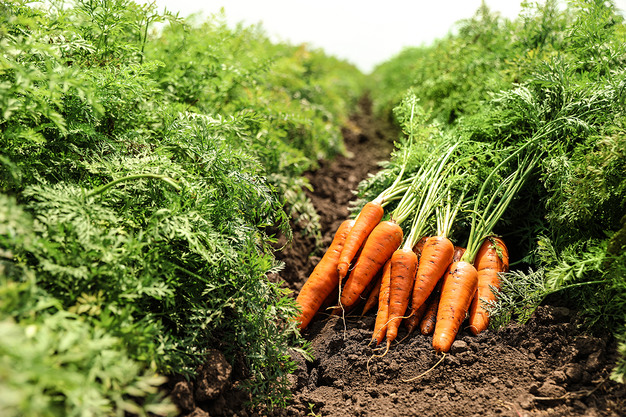 © Chernetskaya | Dreamstime
Early carrots were planted at the end of August, while in rural areas, planting began around mid-September.
The season benefited from higher rainfall and increased water availability for irrigation throughout the crop cycle. However, these rains also led to substantial flooding in autumn, particularly in low-lying rural areas. Despite challenging weather, the cultivated area grew by 8.9%, totaling 3,151 hectares—the highest in the past five years.
In the 2024/25 season, Andalusia contributed 42% of Spain's total carrot output and 42.3% of the cultivated area. By province, Cádiz accounted for 28.5% of national production, and Seville for 12.6%. Along with Andalusia, Castile and León is one of the main producing regions, accounting for 39.2% of the crop and 40.9% of the national area, while Castile-La Mancha has a smaller share, with 9.6% of the crop.
The carrots' seasonal average price was $0.33 per pound, which is 24% lower than the previous season and 16% lower than the average of the last five seasons.
Andalusian carrot exports have slightly exceeded 65,000 tons, but have dropped 37% compared to the previous year. France remains the main destination, accounting for 33% of the total exported volume, followed by Germany (23%) and the Netherlands (16%). Regarding imports into Andalusia, the primary countries of origin are France (35%) and the Netherlands (34%).
Source: Observatorio de Precios de la Junta de Andalucía.