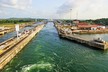
Panama has annulled port concessions held by Panama Port Company, a subsidiary of Hong Kong-based CK Hutchison, and transferred interim operations of the Balboa and Cristobal terminals to APM Terminals, part of A.P. Moller-Maersk, and Terminal Investment, the port operating arm of Mediterranean Shipping Co.
The decision, published in the official gazette, formalizes a Supreme Court ruling that the more than two-decade concessions for the two terminals near the Panama Canal were unconstitutional. The Panamanian government has assumed control of the port facilities, including cranes, vehicles, computer systems, and software, under a decree intended to maintain operations until a new concession is awarded within 18 months.
Under the interim arrangement, APM Terminals will operate the Balboa port on the Pacific side, while Terminal Investment will manage the Cristobal port on the Atlantic side.
In a statement, CK Hutchison said Panama Port Company ceased operations at both terminals and described the executive decree as "unlawful." The company added that it would continue consulting legal advisors and has initiated arbitration proceedings against Panama. On Feb. 12, CK Hutchison stated that "any steps" that Maersk or its subsidiary takes to operate the ports without its agreement will likely "result in legal recourse."
The dispute has taken on geopolitical dimensions involving the United States and China. After U.S. President Donald Trump alleged that China was "running the Panama Canal," CK Hutchison negotiated a US$23 billion agreement to sell its non-Chinese port assets to a consortium led by BlackRock. Beijing criticized the proposed sale as "kowtowing" to American pressure.
China has reportedly instructed state firms to suspend discussions on new projects in Panama and urged shipping companies to consider alternative routes.
For the fresh produce sector, continued port functionality at the canal remains central to global supply chains linking Latin America with North America, Europe, and Asia. The government's interim management structure is intended to avoid operational disruption while legal and commercial processes continue.
Source: CNBC