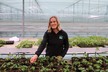
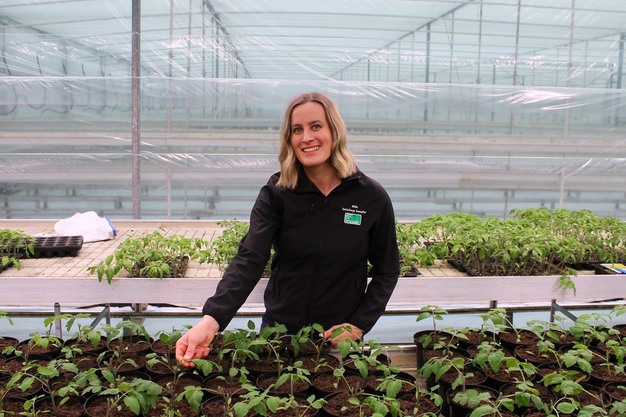
At Karintorps Tomater, generational transition is closely linked with technical and market development. As Hilde Groenewegen steps formally into her role as Market and Business Developer, she does so with a lifetime of exposure to the family greenhouse. "I have been a part of the business ever since I was little, and now I am really involved in every step from seed to harvest," she says.
 © Karintorps Tomater
Automation ambitions and economic realities
That full-cycle involvement has helped with her perspective on modern greenhouse production. "Working hands-on across the full production cycle has shown me that the more automated the processes are, the simpler and more time-efficient work can be. I think the future of greenhouse growing is to make tasks easier with modern technology."
However, she is clear about the constraints facing smaller growers. "For a small company like ours, automation can be difficult. We are few people, and automation often costs more than it gives back. The fact that market prices are increasing also makes this more challenging." Investment decisions must therefore balance labor efficiency, energy costs and realistic payback periods.
 © Karintorps Tomater
Aligning varieties with demand
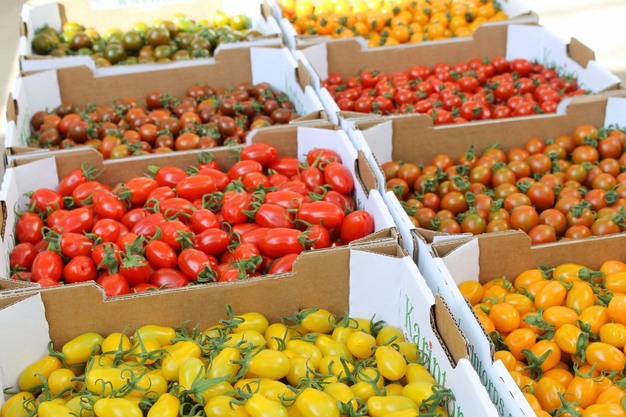
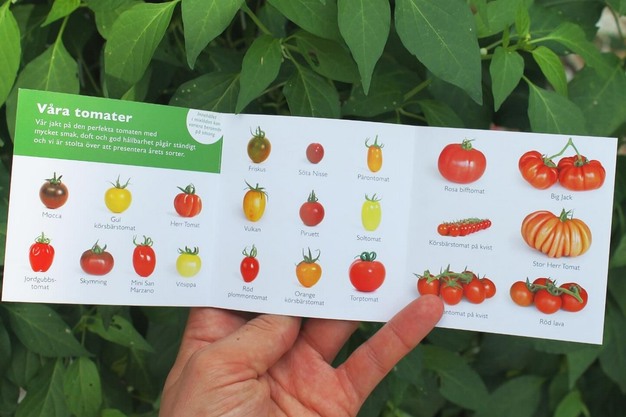
Market alignment is another priority. "I believe it's important that the company grows and keeps evolving. An important part is growing what the market is asking for," she says. The company sees strong demand for differentiated tomato varieties. "We see strong interest in specific shapes and flavours of tomatoes," she notes, alongside increasing interest in strawberries and raspberries.
At the same time, Hilde views marketing as a strategic production tool. "Marketing plays an important role in shaping demand and inspiring customers' choices. As I am responsible for our marketing, I believe we can do even more in this area." Developing the farm shop is part of that strategy, building on an existing customer base and creating opportunities for closer engagement.
 © Karintorps Tomater
Climate constraints and competitive pressure
Production in Sweden presents structural challenges. "The climate is always a factor. Sweden generally has a cold and dark climate, and this affects growth," she says. Controlled climate management is therefore essential. Competition from imported tomatoes, often sold at lower prices, adds further pressure. "We compete with imported tomatoes that are sold at lower prices, even though we offer a completely different product."
This season has also required additional focus on propagation. "One of the biggest challenges this year is managing all the work that comes with growing everything from seed ourselves." While this increases control over plant quality and planning, it also intensifies labor demands early in the cycle.
Biological control and active climate management
Local, unsprayed production remains central to the company's identity. "We work closely with nature throughout our growing process. We rely on biological pest control to protect and maintain the plants in a natural way," she explains. Pollination is handled by bumblebees, integrated as part of the biological system.
Climate strategy supports plant health. "We invest more energy and heat into the growing process, maintaining an active and carefully controlled climate to ensure strong and healthy plants. By doing so, we reduce the risk of potential issues such as mold." Preventive control through plant vigor and stable conditions reduces the need for corrective interventions.
 © Karintorps Tomater
Direct sales and collaborative strategy
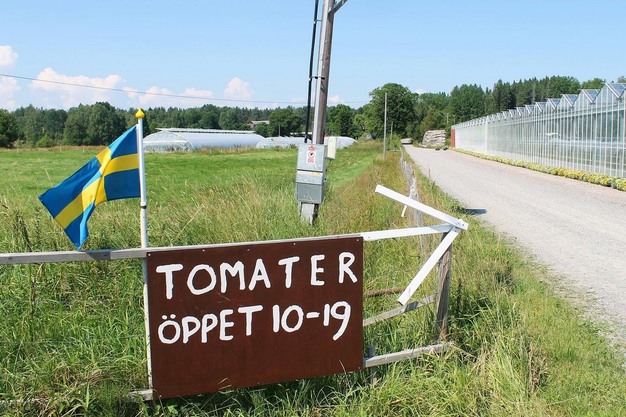
Direct-to-consumer channels are expected to play a larger role going forward. "Selling directly to customers gives them the chance to visit our farm and see the production," she says. Interest in farm visits and events is increasing, reinforcing the value of transparency and local sourcing. Expanding the farm shop provides flexibility and a platform to respond directly to consumer preferences.
Strategic decisions are made collaboratively across generations. "Together with my parents, we make decisions about how to develop the company. I focus on marketing, but I also work closely with my father on the plants and I am eager to continue learning more about cultivation. We share knowledge and discuss all the important aspects together."
Looking ahead, she is focused on both crop diversification and retail development. "It will be very exciting to see this year's harvest, especially since we planted the seeds ourselves and have taken a bigger step into growing strawberries and raspberries. I'm really excited to see how our local store can grow and change each year."
For more information:
Karintorps Tomater
Hilde Groenewegen
[email protected]
www.instagram.com/karintorpstomater
www.karintorps.se