India's Jammu and Kashmir exported more than 637,000 metric tons of fruit outside the Union Territory during 2024–25, generating a turnover of over Rs 3,171 crore, about US$3.8 billion, according to the Agriculture Production Department (Horticulture). Mandi-level data show Sopore fruit mandi in Baramulla district as the largest contributor, exporting 289.22 thousand metric tons with a turnover of Rs 1,387.50 crore, about US$1.66 billion. Aglar fruit mandi in Shopian ranked second with 121.19 thousand metric tons and a turnover of Rs 628.34 crore, about US$750 million.
In south Kashmir, Jablipora mandi in Anantnag exported 64.86 thousand metric tons worth Rs 282.90 crore, about US$338 million. Pulwama district exported through Prichoo and Pachhar mandis, together handling 35.99 thousand metric tons. Parimpora mandi in Srinagar exported 32.29 thousand metric tons, while Kulgam mandi handled 16.81 thousand metric tons. In north Kashmir, Handwara exported 36.16 thousand metric tons and Kupwara mandi 2.63 thousand metric tons. Narwal mandi in the Jammu region exported 17.70 thousand metric tons. Overall exports totaled 637.57 thousand metric tons with a turnover of Rs 3,171.56 crore, the data show.
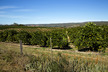
Alongside exports, official surveys indicate continued horticulture expansion. The Economic Survey 2024–25 reports that the area under major horticulture crops increased from 3.42 lakh hectares in 2021–22 to 3.44 lakh hectares by November 2024, while production rose from 24.31 lakh to 26.35 lakh metric tons. The area under high and medium density plantations expanded from 880.89 hectares up to 2020–21 to 18,533.27 hectares by November 2024.
Earlier surveys show similar trends, with fruit crop area increasing from 334,719 hectares in 2020–21 to 341,697 hectares in 2022–23 and production rising from 20.36 lakh to 24.31 lakh metric tons. Officials attribute much of the change to the conversion of agricultural land to high-density apple orchards. Under the High-Density Plantation Scheme, about 1,119 hectares have been covered since 2017–18, with 18,915 hectares under medium-density plantations. Government documents state that Rs 139 crore, about US$166 million, has been provided for high-density planting.
Chief Minister Omar Abdullah said: "Our fruit production increased from 26.43 LMT (2023-24) to 26.92 LMT (2024–25). We aim to reach 29.72 LMT production by 2029–30." He also cited capital expenditure of Rs 1,878 crore, about US$2.25 billion, for agriculture and allied sectors in 2026–27.
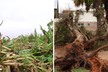
Growers reported climate-related losses. Muhammad Shafi from Shopian said: "The devastating hailstorm in May last year and heavy rainfall in August destroyed apple and vegetable crops worth crores." Omar Abdullah acknowledged the impact, stating: "These two calamities have further accentuated the fiscal challenges before us."
To address climate risks, the government announced the Restructured Weather-Based Insurance Scheme for apple, saffron, mango, and litchi, covering Rs 6,594.93 crore, about US$7.9 billion. Officials also highlighted storage gaps.
Source 1: KashmirLife
Source 2: Bharat