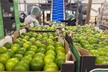
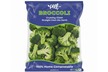
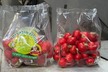
A recent Canadian federal government study examining the cost implications of reducing plastic packaging for fresh produce sold in Canada provides insight into how packaging decisions are currently made within the produce sector. While the study focuses on economic and functional considerations, its findings also raise questions about how environmental objectives are addressed in practice.
Packaging plays an established role in protecting produce, supporting logistics, and reducing food waste. However, the study acknowledges that today's retail environment is shaped by large-format stores, multiple retailers, global supply chains, and increasing demand for convenience. As a result, the same product may be sold loose or pre-packaged in different formats, depending on retail practices and consumer behaviour.
 © The Paper and Paperboard Packaging Council
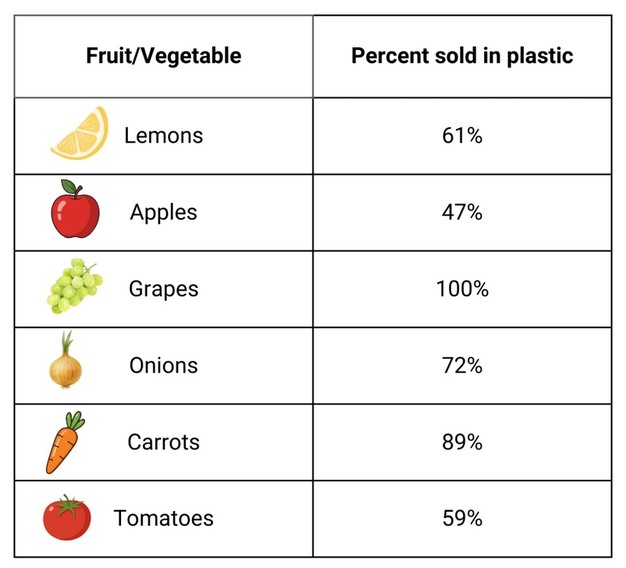
Plastic packaging remains widely used. In 2024, an estimated 400 million tons of plastic waste were generated globally, and projections indicate that global plastic waste could reach approximately 1.2 billion tons by 2060 without substantial changes. The federal report shows that a considerable share of produce sold in Canada is packaged in plastic. For context, a 2024 Retail Economics study found that 45 per cent of plastic food packaging could potentially be replaced by alternative packaging or by selling products loose.
Apples are used in the study as an example of material substitution. Canadian retail audits cited in the report showed that loose apples were priced 39 per cent higher by weight than packaged apples. The study estimates that replacing plastic apple packaging with paper packaging could increase retail prices by approximately 42 per cent.
This example highlights how efforts to reduce plastic packaging are influenced by existing retail pricing structures and consumer purchasing habits. Apples have traditionally been sold loose and generally do not require consumer-facing packaging for protection. The pricing comparison reflects retail systems in which packaged formats are positioned differently from loose produce, rather than a direct assessment of packaging necessity.
The study also explores the potential role of reusable plastic crates (RPCs) as an alternative to corrugated packaging. Corrugated cartons are widely used in Canada and are supported by established recycling systems with active end markets. Although described as "single-use" in the report, corrugated containers are typically collected, recycled, and reused multiple times.
RPCs are sometimes presented as a circular option, but they remain plastic. Their environmental performance depends on system design, return rates, and end-of-life management. Claims around recyclability often refer to controlled or closed-loop systems, which may not reflect real-world recovery across jurisdictions.
The federal study underscores that produce packaging decisions involve trade-offs across protection, logistics, retail practices, and waste management. Reducing plastic use requires distinguishing between packaging needed for product protection and packaging driven by retail formats or consumer expectations.
For more information:
The Paper and Paperboard Packaging Council
Tel: +1 905 458 0087
Email: [email protected]
www.ppec-paper.com