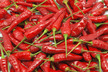
Mexico's chili exports totaled US$1.221 billion in 2025, representing an increase of 4.6 per cent compared with 2024. By volume, however, exports declined by 1.8 per cent year on year to 1 million 137,000 tons.
According to the FAO, chili pepper production in Mexico is marked by a wide range of varieties, cultivation in both tropical and temperate climates, and strong participation by small producers. Chili peppers remain a staple in domestic consumption and maintain a continuous presence in export markets.
After red tomatoes, chili peppers ranked as Mexico's second most exported vegetable in 2025. Overall, vegetable exports from Mexico declined by 6.6 per cent in value to US$14.905 billion, while export volumes increased by 1.1 per cent to 10 million 795,000 tons.
Examples of companies active in Mexican chili production and exports include Grupo Bionatur, Divemex, and Grupo San Cayetano. These companies operate at scale, combining protected cultivation with open-field production, integrating packing and export operations, and supplying both domestic and U.S. markets.
Agricultural trade between Mexico and the United States continues to evolve. Product diversity, transport routes, and peak shipping periods are expanding, while nearshoring trends are increasing cross-border traffic along the 3,200-kilometer border. Mexico currently maintains 14 free trade agreements with 50 countries. Since the implementation of NAFTA in 1994 and its update to the USMCA in 2020, agricultural tariffs with the U.S. have been progressively eliminated, supporting agri-food trade flows.
At a macroeconomic level, Mexico's GDP grew by 1.2 per cent in 2024 to more than US$1.8 trillion. In 2025, annual GDP growth slowed to 0.7 per cent, driven mainly by exports and consumption. Toward the end of the year, quarterly growth eased to 0.1 per cent, reflecting slower production, reduced private investment, and business caution linked to global conditions.
On the demand side, the United States hosts a broad range of chili processing companies. Badia Spices produces and distributes spices and dried chilies from Florida, with sales in more than 70 countries. Conagra Brands manufactures hot sauces and packaged foods containing chilies, while Bruce Foods produces chili mixes and Tex-Mex products.
Despite lower export volumes, chili peppers remain a core component of Mexico's vegetable export portfolio and continue to play a role in bilateral trade with the U.S.
Source: Opportimes