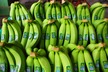
South Korea's Ministry of Agriculture, Food and Rural Affairs announced that it will reduce tariff rates on imported bananas, pineapples, and mangoes from 30 per cent to 5 per cent. The measure is intended to address rising prices for imported fruit linked to exchange rate movements.
According to the ministry, the reduced tariffs will apply to shipments arriving on the 12th of the month. A ministry official said, "Products subject to the reduced tariffs are expected to be supplied to the market after mid-month." Lowering the tariff rate from 30 per cent to 5 per cent means that the duty on imported mangoes valued at 10,000 won, about US$7.7, will fall from 3,000 won, around US$2.3, to 500 won, about US$0.4.
The government introduced the tariff reduction in response to higher exchange rates that have increased the cost of imported fruit. According to the Ministry of Data and Statistics, between December 2024 and December of the previous year, prices of imported fruits fell by 2.1 per cent in dollar terms but rose by 0.2 per cent in won terms. As the won weakens, imported fruit becomes more expensive in local currency terms.
Park Jeong-hoon, head of the ministry's Food Policy Division, said, "Prices of some imported fruits have risen due to poor crop conditions in exporting countries like the Philippines and high exchange rates, but domestically produced fruits remain stably supplied."
Last month, prices of agricultural, forestry, and fishery products rose by 2.6 per cent compared with the same month a year earlier. While overall food price movement remained contained, certain imported fruits recorded higher prices. Apple prices increased following a reduction in domestic production.
Livestock product prices rose by 4.1 per cent year-on-year, reflecting lower livestock numbers and the spread of animal diseases. In response, the Ministry of Agriculture, Food and Rural Affairs said, "We will expand the supply of Lunar New Year holiday goods to 1.7 times the usual volume and work with producer groups to implement large-scale discounts to minimize the burden on consumers."
The tariff reduction forms part of the government's broader approach to managing food price pressures while maintaining market supply during periods of currency volatility.
Source: The Chosun Daily