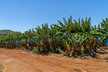
The spread of the Ralstonia solanacearum bacterium, known as moko, has raised alarms in the province of El Oro, one of Ecuador's main banana production centers. According to Javier Lupú, director of Productive Development of the Prefecture, the disease is now present in 185 farms, risking not only production but also employment and the local economy.
El Oro has about 3,800 banana producers and 54,000 hectares of crops. Around 35,000 workers rely directly on this crop, and more than 100,000 people indirectly. "Any threat to the crop affects not only producers but also thousands of families that depend on bananas," Lupú said.
The first case of moko in the province was identified in 2019 in the Arenillas canton. Since then, the bacterium has been expanding to other regions. This spread is likely related to ongoing crew movements between plantations and the lack of strict biosecurity measures, such as disinfecting tools, clothing, and footwear.
Provincial authorities have emphasized the importance of strengthening sanitary measures and maintaining close coordination with growers to contain the disease. Moko is seen as one of the main phytosanitary threats to the Ecuadorian banana industry, making prevention and control essential to protect both production and the livelihoods of thousands of families.
Source: machalamovil.com