The United States Department of Agriculture's (USDA) Animal and Plant Health Inspection Service (APHIS) is adjusting its sterile fly dispersal program aimed at preventing the northward spread of New World screwworm (NWS). Around 100 million sterile flies are released each week. Under the revised approach, aircraft and sterile insects will be reallocated to strengthen coverage along the U.S.-Mexico border.
The updated dispersal area will include operations extending around 50 miles into Texas, along the border with the Mexican state of Tamaulipas. According to the USDA, sterile insect production and targeted release remain key elements of NWS prevention, alongside surveillance and import control measures.
 © USDA
"At Secretary Rollins' direction, our highest priority is protecting the United States from screwworm," said Dudley Hoskins, Under Secretary of Marketing and Regulatory Programs for USDA. "The northernmost active case of NWS in Mexico is still about 200 miles away from the border, but we've seen cases continue to spread in Tamaulipas and further south in Mexico, so we are proactively shifting our polygon as we make every effort to prevent NWS from reaching our border."
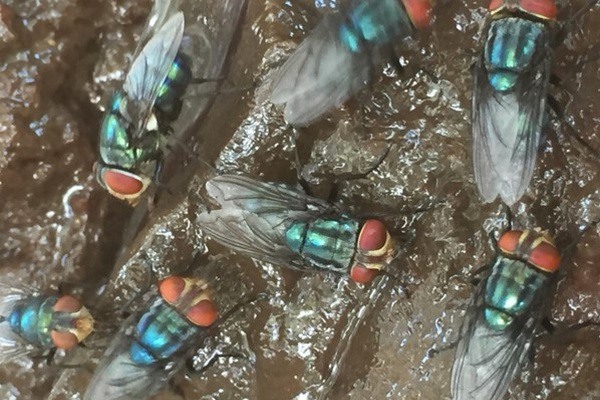
The sterile insect technique limits reproduction by ensuring female flies mate with sterile males, resulting in eggs that do not hatch. In this case, sterile flies will be released north of the current outbreak areas in Mexico to create a preventive buffer zone. USDA noted that sterile flies may be detected in Texas traps as part of ongoing surveillance. To avoid confusion with wild flies, sterile insects are dyed prior to release, allowing quick identification under UV light.
USDA is also maintaining import inspection protocols. This week, a horse from Argentina, undergoing routine quarantine in Florida, was found to have larvae in an open wound. Samples analysed by the National Veterinary Services Laboratories (NVSL) in Iowa confirmed the presence of New World screwworm larvae. The animal remains in quarantine and was treated according to established procedures. USDA said the case does not appear to be linked to the situation in Mexico.
Surveillance efforts continue along the southern border, including 121 NWS-specific traps and broader insect monitoring networks. More than 42,000 flies have been analysed to date, with no NWS detections in the United States. Wildlife inspections across multiple states have also found no evidence of infestation.
USDA continues to advise animal owners to monitor pets and livestock for signs such as enlarging wounds or visible larvae and to report suspected cases to veterinary authorities.
 For more information:
USDA
Tel: +1 (202) 720-2791
Email: [email protected]
www.aphis.usda.gov