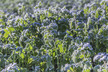
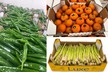
Growers across southwest Florida are preparing for a freeze event that could affect winter fruit and vegetable crops for the first time in more than a decade.
Preparations began several days in advance as forecasts warned of overnight freezing temperatures, with the possibility of two or more consecutive cold nights. Interior areas of Collier, Hendry, Glades, and Lee counties face the highest risk.
Alfie Oakes, founder and CEO of Oakes Farms in Collier County, said crop protection efforts cover around 400 hectares. "We are covering up almost 1,000 acres of plants. We are doing them differently," he said. "We've got 1.5 million plates and cups covering over the small plants, then we've got 100 full truckloads of Palmetto leaves that we've cut to lay over the big plants."
At his Immokalee operation, about 280 hectares of watermelons, young peppers, and tomatoes were covered. "The older peppers and tomatoes, we are not covering. They are stronger, and even if it freezes and burns the bush, the fruit inside will probably be good," Oakes said.
He estimated that a failed protection effort could result in US$10 million in lost input costs, while success could generate similar returns. "It will probably cost $300,00 or $400,000 to do this, as an insurance policy," he said, adding that his crops are uninsured.
According to National Weather Service meteorologist Ana Torres-Vazquez, interior Collier County could see three to four hours of freezing temperatures, while Hendry and Glades counties may experience seven to eight hours. "It all comes down to how far inland you are; the farther inland and the farther north, the longer the event," she said.
Freeze warnings extend from Saturday night through Sunday morning, with similar conditions possible into Monday and a potential frost event thereafter.
UF/IFAS emeritus vegetable and horticultural agent Gene McAvoy said the last comparable freeze occurred in 2010. "It doesn't look good," he said. He noted that tomatoes, peppers, sweet corn, green beans, basil, and citrus are highly sensitive to prolonged cold. "If we get temperatures below 28 for four hours or more, that will affect citrus as well," he said.
McAvoy warned that losses could reach billions of dollars statewide if freezing persists for multiple days. He added that many growers are already under financial pressure following weak fall returns and limited availability of replacement plants. "No one is sitting on enough replacement plants to make everyone whole again, even if they had the money to buy them," he said.
He estimated that fewer than 30 per cent of green pepper growers carry crop insurance. "It only pays pennies on the dollar," he said.
Source: Naples Daily News