The Israeli avocado sector has faced increasing pressure over the past decade due to growing global demand, limited availability of suitable land, rising water costs, and the spread of soil-borne diseases. These challenges have prompted closer attention to orchard establishment practices, particularly the choice and quality of propagation material.
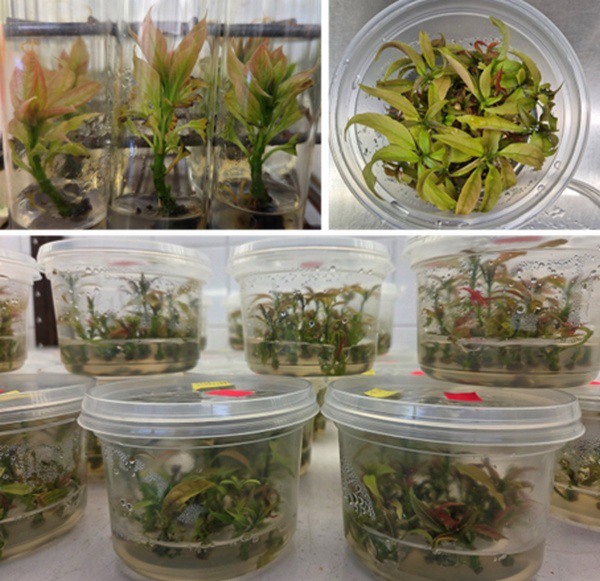
In recent years, grafted avocado seedlings produced on tissue-culture rootstocks have moved from experimental development toward commercial application. This work has been carried out by the R&D department of Rahan Meristem, which has developed protocols for propagating avocado rootstocks through plant tissue culture at a commercial scale.
 © Rahan Meristem
The role of the rootstock
Rootstocks have a long-term influence on orchard performance, affecting vegetative growth, yield consistency, adaptation to soil conditions, tolerance to salinity, excess moisture, and drought, and resistance to soil-borne pathogens. In Israel, as in many avocado-producing regions, orchards are still largely established on seed-based rootstocks. While easily available, seed-derived material shows high genetic variability, resulting in uneven growth, inconsistent yields, and variable stress tolerance.
Vegetative clonal rootstocks offer greater genetic uniformity and more predictable performance, but their conventional propagation is complex, slow, and costly, limiting large-scale adoption.
Application of tissue culture
Plant tissue culture has been introduced as an alternative method for producing avocado rootstocks, including selected seed-based types and vegetative clones. According to Rahan Meristem, this approach enables year-round production independent of seed availability and seasonal constraints.
 © Rahan Meristem
Earlier attempts to propagate avocado material in vitro were largely limited to research or pilot scale due to inconsistent rooting and establishment. The current protocols aim to provide stable, continuous production at commercial volumes. Reported characteristics of tissue-culture-derived rootstocks include freedom from soil-borne contaminants, genetic uniformity, and consistent early development.
Rootstocks and production results
Rootstocks introduced into tissue culture include seed-based selections such as Dganiya 117, Ashdot 17, Fairchild, and Schiller, as well as vegetative clones such as VC804, VC66, VC801, and VC159. Propagation protocols were adjusted for each genotype through controlled hormone and mineral balances.
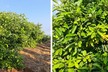
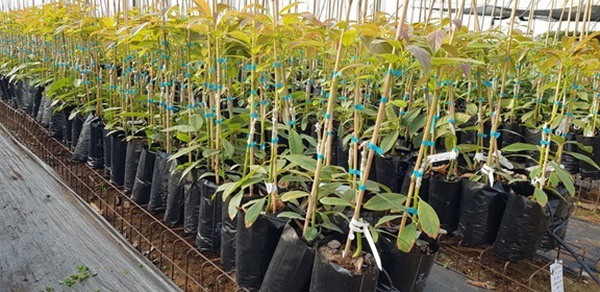
Following acclimatization to greenhouse and net-house conditions, grafting success rates were reported as high, with uniform scion development. Since 2020, tens of thousands of tissue-culture avocado seedlings have been planted in experimental and commercial orchards across Israel.
 © Rahan Meristem
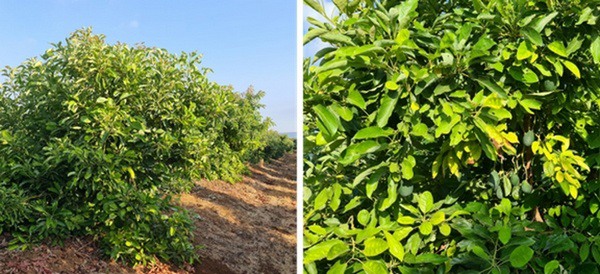
Preliminary yield data from early-bearing years indicate higher yields in tissue-culture plots than in adjacent orchards planted on conventional rootstocks. Long-term monitoring is ongoing to assess performance over multiple production cycles.
Outlook
Tissue-culture avocado rootstocks provide a uniform, disease-free propagation option with consistent availability. As has occurred in other perennial crops, the technology is increasingly being evaluated as a tool for improving orchard uniformity and productivity under modern production constraints.
 © Rahan MeristemFor more information:
Oshry Markovich
Rahan Meristem
Tel: +972 4 9857100
Email: [email protected]
www.rahan.co.il