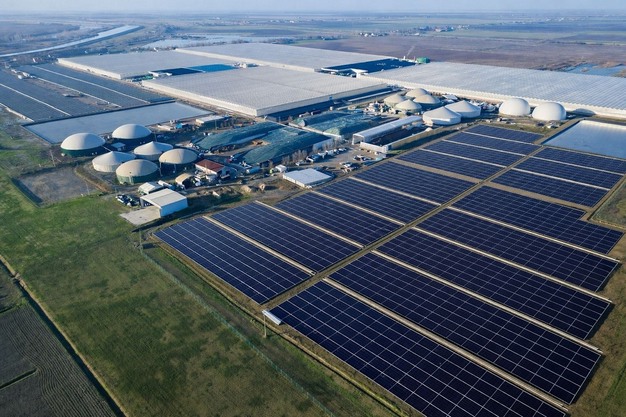
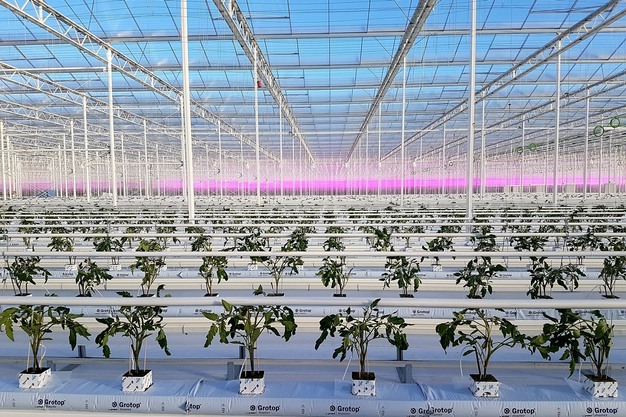
Fri-El Green House is expanding its operations at the Ostellato (Ferrara) site. The company, part of OP Cio (Consorzio Interregionale Ortofrutticolo SCA) and operating under the H₂Orto brand, will add 30 hectares of greenhouses and create 400 jobs in the short term. A biomethanation plant is already operational as part of the project. Two existing biogas plants were converted to biomethane production with CO₂ recovery, and the recovered CO₂ will be used in the adjacent greenhouses to support plant photosynthesis.
 © Fri-El Green House Srl Soc. Agr.
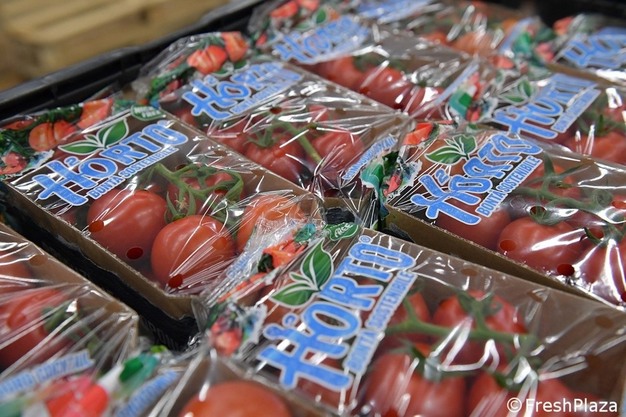
We currently produce conventional and premium bunches, oblong tomatoes, yellow and red datterino tomatoes, cocktail tomatoes, mini plum tomatoes, and both conventional and premium cherry tomatoes, as well as snack cucumbers.
According to Sales Manager Davide D'Ignoto, "Consumption in Italy is not very high at the moment, but we manage to maintain a consistent supply. Foreign sales, on the other hand, have very high volumes. We mainly sell to Germany and Austria. Recently, we have also entered markets such as Denmark, Estonia, and Sweden. We will soon start supplying France and Poland as well."
 © Cristiano Riciputi | FreshPlaza.com
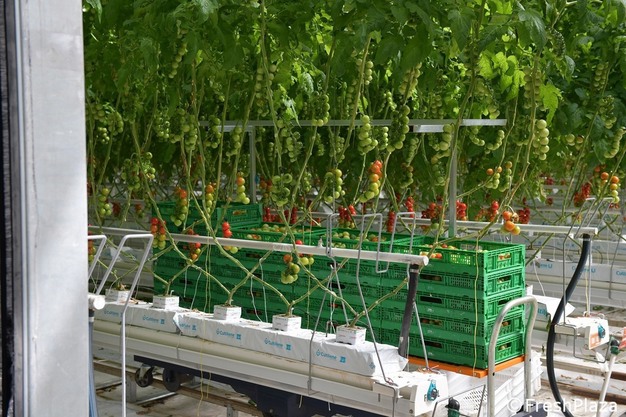
Regarding the new biomethane plant, Florian Gostner, the CEO of Fri-El Green House, said, "Our goal is to take a quantum leap forward by expanding the greenhouses dedicated to hydroponic cultivation. This will increase our production capacity and allow us to introduce new sustainable technologies. To this end, Fri-El has initiated an integrated investment plan to sustainably cover all these needs. Geothermal solutions will provide heat, and electricity will come from floating photovoltaic systems that collect and store rainwater in dedicated reservoirs. The greenhouses will draw from these reservoirs to meet their water needs. The biomethane project is a key element of the site's envisioned circular economy. Our goal is to establish a zero-impact agricultural supply chain."
 © Cristiano Riciputi | FreshPlaza.com
The plant is integrated with agro-industrial activities and receives processing waste streams. These waste streams are used to produce biogas, which is then converted into biomethane. The process also yields an agricultural soil improver that is returned to the fields, contributing to soil fertility and closing the resource cycle.
 © Fri-El Green House Srl Soc. Agr.
The plant adheres to a development strategy that aligns with European energy policies. These policies aim to produce 35 billion cubic meters of biomethane by 2030, which is a key component of the energy transition. Biomethane is obtained from biogas, which is produced through the natural fermentation of organic materials supplied to the plant. This gas mainly consists of methane and carbon dioxide.
Another strategic element of the Ostellato plant is based on this process. It was developed to recover the CO₂ separated during the biogas purification process. The CO₂ is then reintroduced into greenhouses to fertilize tomato plants with carbon. In a CO₂-enriched atmosphere, these plants can significantly increase their production yields.
For more information:
H2ORTO
Via delle Serre, 1
44020 Ostellato (Ferrara) - Italy
+39 0533 57411
www.h2orto.it