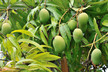
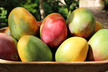
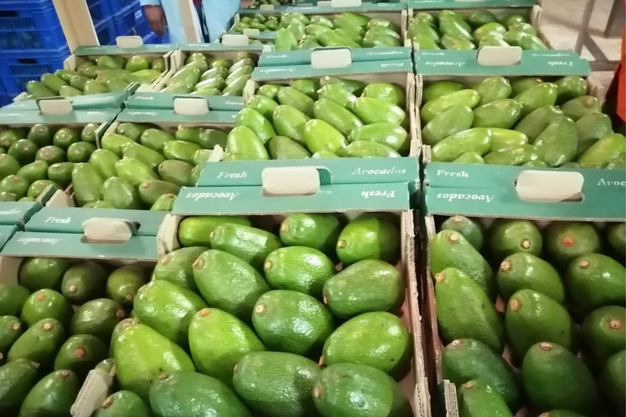
Green-skinned avocado varieties from Kenya, traditionally sold on the local market, have recently gained in importance thanks to sustained foreign demand and attractive prices last season, sometimes as high as those of the Hass variety. This shift encouraged growers to pay more attention to these varieties, bringing the early-season Kenyan avocados to the spotlight.
Paul Kyalo, managing director of Konza Tropicals, states, "Green-skin production growth has historically lagged behind Hass, which remains the dominant export variety. In a typical Kenyan avocado orchard, around 85-90% is Hass and 10–15% green skins, with green skins traditionally maintained to support pollination and fruit set rather than as a primary commercial crop. However, last season marked an important shift. For the first time, we saw farmgate prices for green skins approach -and in some cases match- Hass prices, particularly for export-grade fruit. This was largely driven by expanding export programs into green-skin-preference markets, notably the Middle East and North Africa, as well as Turkey and parts of Eastern Europe, where Kenyan green skins are increasingly well accepted."
 © Konza Tropicals
This new shift encouraged growers to harvest more selectively and channel green skins into export programs rather than the local market, according to the grower. "As a result, green skins that would previously have been sold domestically were instead exported, lifting overall export volumes without a corresponding increase in planted area," he adds.
Early harvests and exports
The Kenyan avocado season usually starts with green skin varieties in mid-February, but early shipments in limited quantities are already available. Kyalo says, "Kenya is currently seeing very limited volumes of green-skin avocados being harvested and shipped, mainly by exporters with early-maturing orchards and fruit that meets the minimum dry matter requirements. These shipments are taking place under the existing regulatory framework, where only fruit that is cleared for shipment during the sea-freight season closure period can be exported, primarily on a controlled basis.
Export programs will transition from small, selective shipments to more consistent volumes, mainly serving markets with established demand for Kenyan green skins. From late February onwards, we anticipate a steady increase in shipments as more orchards reach full maturity and harvesting widens across the main producing zones," the grower adds.
 © Konza Tropicals
Favorable production conditions this season
Despite recent reports from industry sources of unfavourable weather conditions reducing yields in some regions, Kyalo maintains that production conditions have remained stable overall. He explains, "The main avocado-growing zones received average and well-distributed rainfall during the last quarter of 2025, which is particularly important given that over 80% of Kenya's avocado production is rain-fed. These rainfall patterns supported good flowering, fruit set, and early fruit development across most producing regions. Looking ahead, rainfall performance in April and May will be critical in determining final fruit sizing for the mid- and late-season crop. Adequate moisture during this period will support continued cell expansion and size development as the season progresses from June onwards, while any moisture stress could shift the size curve toward smaller counts.
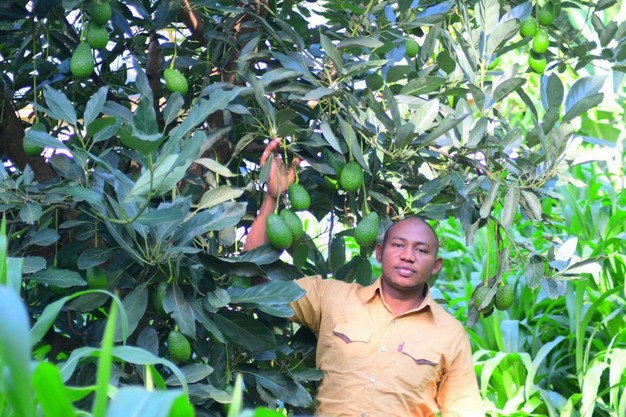
In addition to weather conditions, Kenya continues to see structural growth in production. New avocado plantations are reaching commercial maturity, and non-traditional production zones are emerging strongly, especially in the Rift Valley region, complementing the established coffee- and tea-growing zones. This geographical diversification is improving supply continuity and resilience," Kyalo adds.
Increasing production volumes
Volumes are expected to remain stable overall this season, but better sorting and marketing will allow for larger exportable quantities, according to Kyalo. He explains, "Because of this stronger demand and price performance, Kenya's green-skin export volumes increased despite relatively modest growth in planted area. The improved commercial returns are now beginning to influence grower behavior, and while Hass still leads new plantings, we are seeing greater commercial attention being given to green skins, with improved orchard management and post-harvest handling aimed at maximizing export-grade yields.
Based on current orchard conditions and projected yields, we expect overall avocado volumes to increase by approximately 20% this year, 2026, compared to last year. Early-season fruit development indicates a size profile dominated by medium counts, with 18s, 20s, 22s, and 24s expected to account for the bulk of volumes during the first three months of the season," Kyalo adds.
Green-skin avocado acreage in Kenya remains largely stable, but export volumes forecasts are up compared to last season, supported by better market access, stronger prices, and a growing recognition of green skins as a viable export product rather than just a secondary or pollination variety," the grower continues.
 © Youness Bensaid | FreshPlaza.com
Growing demand for Kenyan Fuerte
These recent developments, which amount to a market transformation, have been made possible by growing demand from MENA countries, while the European demand is lagging due to the situation in the Red Sea. Kyalo explains, "Kenyan green-skin avocados are traditionally in highest demand in the Middle East and North Africa (MENA) region, which consistently absorbs the largest share of volumes. These markets have a strong consumer preference for green-skin varieties due to their eating characteristics, familiarity, and price positioning. In addition to the Gulf countries, another market emerged last season, which is Turkey.
Turkey has shown a stable and growing demand for Fuerte avocados. We expect this demand pattern to remain largely the same this season, with MENA and Turkey continuing to anchor green-skin programs. Interest from Eastern Europe is also present, especially during periods when competing origins are limited," the grower adds.
 © Konza Tropicals
Exports into Western Europe are more sensitive to logistics performance. Shipments to Europe largely depend on transit times and freight reliability, and in particular on whether vessels fully resume the Suez Canal route, which would significantly shorten transit durations. If logistics normalize and transit times improve, Europe could absorb additional green-skin volumes; however, under longer transit scenarios, exports to Europe are expected to remain more selective," he continues.
"On our side at Konza Tropicals, our green-skin avocado acreage remains unchanged compared to last season, with green-skin varieties (mainly Fuerte and local green skins) accounting for roughly 10–15% of the orchard mix, and Hass making up the balance. While acreage has stayed constant, our export volumes of green skins increased last season, mainly because a larger share of the crop met export-grade specifications and was commercially viable for export," Kyalo concludes.
For more information:
Paul Kyalo
Konza Tropicals Limited
Tel: +254 711 214 869
Email: [email protected]
www.konzatropicals.com