South African plums, sugar plums (or prunes), and nectarines hold the most potential in China, Hortgro's manager for trade and markets, Jacques du Preez, told attendants to a seminar organized by the International Fresh Produce Association (IFPA).
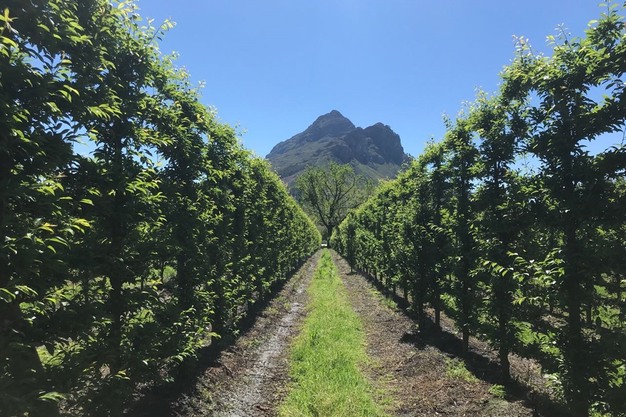 © Custom Plum Company
Like Australia and Chile, South Africa's supply can match the consumption peaks of stonefruit such as the Spring Festival (Chinese New Year), while not overlapping with China's own growing production.
Despite the announcement in October last year that China would now receive South African stonefruit, nothing has yet been allowed to leave for China. Heading into the plum peak, with two weeks left on the sugar plum crop and 6 to 7 weeks on nectarines, exporters remain on tenterhooks, waiting for the final go-ahead, perhaps by the end of the month.
"Hopefully," Du Preez remarked, "we'll get the lists approved from GACC [China's General Administration of Customs] within this week. I'm holding thumbs that we can still have an opportunity to export the last of the sugar plums and also the mid to late season plums to China still this year."
Through its trade with Chile, China is already well-acquainted with many of the white- and yellow-fleshed nectarines grown in South Africa, noted Erietha Peters of Delecta Fruit, a longtime exporter of topfruit into China. "I think the eating quality from South Africa is, indeed, superior. We've got high brix fruit, very sweet and firm."
Zack Zhou, commercial manager at Joy Wing Mau, noted that Chinese plum consumers don't like acidity. "They want attractive appearance, they want crispy, juicy, and high sugar fruit," he explained. "Consumers are becoming more price-sensitive."
Intense competition among stonefruit imports
The Chinese economy presents a challenge, Zhou remarked, and the competition is intense among importing countries. The price in China for certain categories of imported fruit has dropped by 100 Renminbi over four weeks because of high arrivals. "The market price drops very fast every year, but there are still a lot of opportunities in the Chinese market. I think in the future there will be massive competition between Chile and South Africa."
South African nectarines and plums are still highly dependent on continental Europe. "For most stonefruit categories, the Far East and Asia are still a very small component that we would really like to grow going forward," Du Preez said, adding that there has been very healthy growth in the nectarine category and the planting of new cultivars.
Meanwhile in China, Zack Zhou told attendants, nectarine and peach acreage is shrinking and exchanged for cherry orchards. Moreover, a lower peach and nectarine crop is expected from China due to drought and cold damage.
China's share of global plum production has exceeded 55%. "On major e-commerce platforms, sales of fresh plums have increased by over 200% year-on-year," Zhou said, noting that prices have dropped as supply increased. "Current market conditions are characterized by high demand, lower average transaction value, and high sales volume."
Total imports of nectarines and sugar plums from Chile have decreased, with a slight increase in plum exports to China. Zhou said that higher volumes of Chilean white-fleshed nectarines were expected in the future. About 60% to 70% of Australian export stonefruit goes to China, mostly by air freight.
"New varieties such as the Australian cherry plum, Chilean Candy Red, and Sweet Mary fill market gaps, align with health-focused demands, and create a differential competitive edge," Zhou said. "There are premium varieties that command very premium prices at retailers like honey sugar plums. These can be sold for super high prices, even at wholesale."
US growth prepared South Africa for Chinese shipments
The growth in plums to the USA over the last five years was exciting, not just for the growth in volume, Du Preez observed, but because the USA is a cold treatment market requiring subzero shipments for over twenty days, a very similar protocol to what will be required when shipping stonefruit to China.
"We've learned a lot of lessons in terms of how to handle the fruit, at which ripeness to pick them, which varieties can handle cold treatment to the USA, which we can then also send to China once we receive those final approved lists from GACC."
Fumigation at source, coupled with air freight, is also an option available to South Africa in the protocol.
Cherries experience exponential growth
"South Africa did more than double the cherry exports from last season," Du Preez said. The sector has grown exponentially. "We expect it to keep growing, perhaps not at the same rate. There are a lot of new lower chill cultivars that we see coming into production,"
He continued: "We had the Chinese inspection done late last year for cherry access that was excluded from initial inspections. We're optimistic and hopeful that we'll be able to sign the protocol with China for cherries later this year, and that we'll be able to export cherries to China by November this year."
 For more information:
International Fresh Produce Association IFPA
https://www.linkedin.com/showcase/international-fresh-produce-association-southern-africa/