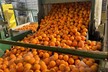
Fruit production in the Three Gorges region of China is increasingly relying on drone-based logistics to manage harvesting and transport in steep terrain. During a media visit on January 15, operations using heavy-duty drones were observed in Wushan, Chongqing, where fruit growers have adopted aerial transport to support orchard-based agriculture.
In Wushan, local production systems have shifted following the introduction of a 10-year fishing ban on the Yangtze River. Communities that once depended on fishing have transitioned toward orchard crops, particularly citrus. This change forms part of broader environmental management efforts linked to the upper reaches of the Yangtze.
In Xingsheng Village, a settlement of around 300 residents, citrus orchards now cover approximately 2.7 square kilometres, equivalent to about 270 hectares. Much of this area consists of steep and uneven slopes, creating challenges for traditional harvest transport methods. Manual movement of fruit across this landscape requires substantial labour and time.
To address these constraints, growers have introduced drone transport systems. The drones are used to lift harvested fruit from lower orchard areas and move it to collection points. According to operators on site, the technology allows rapid turnaround times and reduces the need for repeated manual movement along steep gradients.
"We just lifted this batch from below, and it only took about a minute," one drone operator said. "For a single drone, we can run about 40 sorties a day. Each flight carries 100 kilograms, so we can transport around 4 tons of fruit in a single day."
The use of drones is integrated into broader land and environmental management measures in the region. Since the fishing ban, authorities have focused on limiting soil erosion, managing fertiliser use, and reducing agricultural runoff. Reforestation efforts on steep slopes are also part of this program.
Environmental monitoring continues alongside agricultural activity. Regular debris removal and water quality checks are carried out in the Little Three Gorges area, which feeds into the Yangtze River system. These measures aim to balance agricultural development with river protection.
For growers in Wushan, drone transport has become a practical component of orchard logistics rather than an experimental tool. The system supports harvest efficiency in difficult terrain while fitting into production models adapted to ecological restrictions.
The continued deployment of aerial transport reflects how technology is being incorporated into fruit supply chains in regions where geography limits conventional mechanisation.
click here to see the movie of the drone: Chongqing