Pakistan's rising food import bill has renewed discussion on improving the use of domestic agricultural resources, with industry representatives pointing to crop planning and value addition as ways to limit foreign exchange outflows and support rural employment.
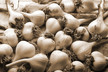
Garlic has been highlighted as an example where domestic production could substitute imports. Shahid Imran, Convener of the Federation of Pakistan Chambers of Commerce and Industry Regional Committee on Food, stated that Pakistan spent about US$52 million on garlic imports from China in 2024. He said this volume could be replaced through commercial-scale garlic cultivation in the Sahiwal division, a region with soil and climate conditions already suited to intensive field crops and known for potato production.
According to Imran, the main constraint for farmers is the cost of certified seed. He suggested that selected union councils in the Sahiwal division could be supported through interest-free loans to cover seed and basic inputs. Without this type of support, he said, small growers are reluctant to shift to new crops.
China remains the world's largest garlic producer and exporter, with annual output above 20 million tons and yields around two and a half times higher than Pakistan's average. Imran said Pakistan could draw on this experience by training agriculture graduates in garlic production and assigning them to work with growers for two to three years on crop management, seed choice, and post-harvest practices.
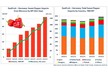
The discussion also extends to processing. Imran noted that small and medium enterprises could be encouraged to produce garlic powder, paste, flakes, and oil. These products have a longer shelf life than fresh garlic and are more suitable for export. Processing facilities could operate in semi-rural areas and rely partly on solar energy. Agriculture currently employs about one-third of Pakistan's workforce while contributing around 24 per cent to GDP, reflecting low productivity and limited processing. Food imports have continued to rise, reaching US$7.7 billion in FY25. According to the State Bank of Pakistan, food imports during July to November FY26 stood at US$3.31 billion, compared with US$2.72 billion in the same period of FY25.
Exporters view garlic as a possible starting point for broader agro-based processing. Faisal Naseer, a Lahore-based agribusiness exporter, said export growth cannot rely only on traditional sectors. "China has consistently encouraged Pakistan to focus on agriculture and livestock, add value, and then export finished or semi-finished products," he said. "If we develop agro-processing clusters for crops like garlic, onions, and chillies, and even livestock products such as meat and dairy, we can generate foreign exchange, create rural employment, and reduce migration to cities."
He added that similar approaches could later be applied to other high-import commodities.
Source: The Express Tribune