Ethiopia's horticulture sector could be poised for a major leap forward if the Ministry of Agriculture adopts a geospatial planning tool similar to the country's recently developed Manufacturing Industry Resource Atlas. That is the view of Mekonnen Solomon, Senior Staff and Horticulture Export Coordinator at the Ministry of Agriculture, who is advocating for a data-driven approach to guide sustainable horticulture development and investment.
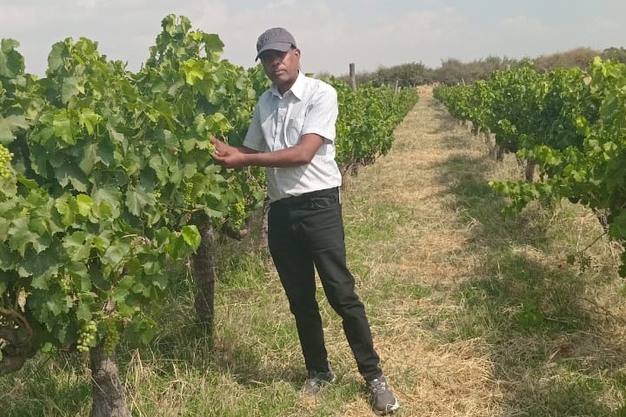 © Mekonnen Solomon.W
Drawing on his experience as a member of the National Technical Committee that developed the Manufacturing Industry Resource Atlas in collaboration with the Ministry of Industry and the World Bank, Mekonnen believes a comparable platform for horticulture could be transformative. "The Manufacturing Industry Resource Atlas has shown us how powerful spatial data can be in guiding smart, evidence-based investment," he said. "There is no reason why horticulture, which is even more sensitive to location, climate, and infrastructure, should not benefit from the same approach."
The call comes at a time when Ethiopia has set ambitious targets under its National Horticulture Strategy. The strategy aims to increase horticulture's contribution to GDP from 4.5% to 12%, raise foreign exchange earnings from $650 million to $3.3 billion, create two million additional jobs, and double annual per capita fruit and vegetable consumption from 50.2 kg to 102 kg. It also envisions sequestering 131 million tons of carbon dioxide in soils and crop biomass over the next decade.
"In the highlands and valleys of Ethiopia, we already have the natural foundations for a globally competitive horticulture sector," Mekonnen noted. "What we need now is precision planning to turn this potential into measurable economic, social, and environmental outcomes."
Ethiopia's horticulture sector spans fruits such as table grapes, avocados, strawberries, mangoes, and bananas; vegetables including tomatoes, onions, and peppers; herbs; and a rapidly growing floriculture industry led by roses and ornamental cuttings. These crops are produced across 18 major agroecological zones, employing thousands of people—particularly women and youth—and supporting downstream agro-processing industries.
However, the sector continues to face structural bottlenecks. Fragmented supply chains, limited cold storage, water scarcity, power shortages, and weak road and air connectivity to export hubs constrain expansion and competitiveness. Post-harvest losses for some crops reach as high as 40%.
Recent infrastructure investments offer new opportunities. The launch of Cool Port Addis cold chain facilities at Mojo Dry Port, combined with the Ethiopia–Djibouti railway, is improving access to international markets. "With the right logistics, Ethiopian produce can reach European and Middle Eastern markets within days," Mekonnen said. "But without accurate, location-specific data, we risk underutilizing these investments."
The Manufacturing Industry Resource Atlas, launched in draft form in July 2025, provides a model. Developed using GIS-based datasets from institutions such as the Ministry of Water and Energy, Ethiopian Electric Power, and the Ethiopian Statistical Service, the atlas maps water resources, energy infrastructure, transport corridors, ICT coverage, labor availability, and industrial activity. Through spatial analysis, it identifies high-potential zones for investment and highlights gaps and constraints.
"This atlas is not just a document; it is an interactive decision-making platform," Mekonnen explained. "It allows policymakers and investors to visualize where resources align and where interventions are needed."
According to Mekonnen, a Horticultural Resource Atlas could apply the same methodology to agriculture-specific variables: soil types, agroecological zones, water availability, climate conditions, labor, power supply, telecom coverage, road access, and proximity to cold chain facilities and ports. Such a tool would directly support Ethiopia's plan to develop eight horticultural corridors, 200 clusters, and 10 horticulture parks over the next decade.
"Imagine being able to clearly see where irrigated horticulture along the Awash Basin makes the most sense, or which fruit clusters are best positioned to benefit from the railway to Djibouti," he said. "This kind of insight reduces guesswork and improves returns on public and private investment."
Beyond exports, Mekonnen emphasized the broader economic impact. Better spatial planning could strengthen agro-processing, support import substitution, and create targeted employment opportunities, especially for youth and women. Integrating climate data would also enhance resilience in the face of increasing climate variability.
While some argue that agriculture's seasonal nature complicates mapping, Mekonnen disagrees. "The manufacturing atlas already handles dynamic variables like energy and resource availability," he said. "With the right partnerships and data governance, horticulture can be mapped just as effectively."
In his view, adopting a Horticultural Resource Atlas is not optional but essential. "If Ethiopia is serious about achieving its horticulture ambitions, we need tools that match that ambition," Mekonnen concluded. "A Horticultural Resource Atlas would help ensure that every investment, every corridor, and every cluster is built on solid evidence—so that growth is inclusive, competitive, and sustainable."
For more information:
Ethiopian Ministry of Agriculture
www.moa.gov.et