After a difficult 2024 marked by the El Niño phenomenon, Peru's avocado industry has regained strength in 2025. One of the key players, Westfalia Fruit Perú, has not only bounced back but is now laying solid groundwork for further growth, both in volume and market diversification, as well as in industrial processing.
"We've reached 43,000 tons in exports this year," says Esther Sánchez Hernández, Commercial Director at Westfalia Fruit Perú. "That's a significant recovery from the 34,000 tons in 2024, a year heavily impacted by El Niño. We've even surpassed 2023 levels, which were 40,000 tons in what was considered a normal year."
 © Westfalia Fruit
She attributes this progress to several factors. "The trees had a recovery year in 2024, which helped improve production, and a good number of our young plantations have started yielding as expected."
Climate resilience through geographic diversification
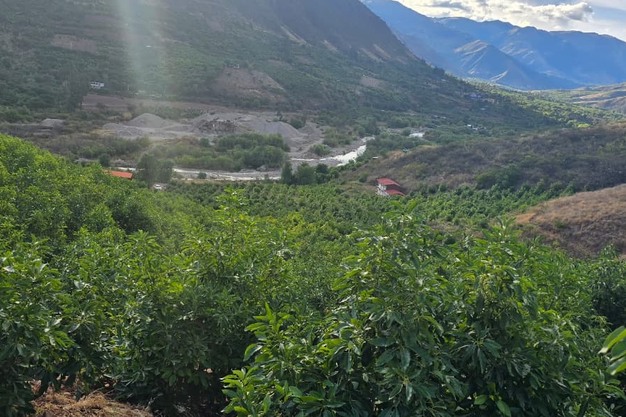
Westfalia operates across 14 regions in Peru, which allows for a longer harvest window, from February through September. "About 25% of our volume comes from the highlands, where the season starts in February," Sánchez explains. "The remaining 75% comes from the northern and southern coastal areas, where harvesting continues until September."
 © Westfalia Fruit
"About 25% of our volume comes from the highlands, where the season starts in February," Sánchez explains.
This geographic spread has helped buffer climate-related disruptions. "By covering a wide range of growing regions and using effective post-harvest processes, like monitoring dry matter and using controlled atmospheres, we've managed to maintain fruit quality, even in a challenging year like 2024."
Market opportunities in Europe and Asia
Westfalia's commercial strategy aligns with its harvest windows. Early-season fruit from the highlands is especially valuable in Europe, though competition remains tight. "It depends a lot on what countries like Spain and Morocco are doing. If they're shipping a lot of fruit, the European market becomes more competitive."
That's where Asia comes into play, especially during early-season windows. "Markets like China, Japan, and South Korea appreciate avocados with longer post-harvest life. During that time, Mexico—Asia's main supplier—tends to ship fruit with higher dry matter, which reduces shelf life. That gives Peruvian avocados a distinct advantage."
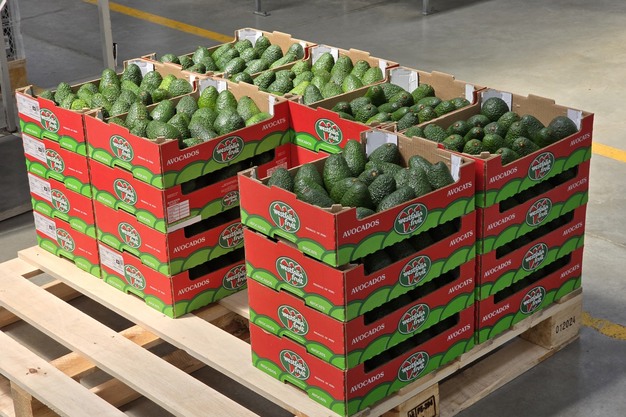
Westfalia's current export destinations are well diversified: Europe accounts for 43%, Asia follows with 31% (China alone makes up 15%), the United States takes 18%, and Latin America, led by Argentina, receives the remaining 8%.
 © Westfalia Fruit
The U.S. campaign starts in mid-April and runs through August, after which Mexico takes over. "Peru supplies Europe throughout the season, but between May and July, there can be oversupply issues due to high volumes. Asia, on the other hand, shows more stability thanks to well-established programs. We see big potential there, but logistics remain a key challenge," Sánchez notes.
New markets on the horizon
Westfalia is also targeting new regions. "The Philippines is already open to us, and we're working to enter Mexico, likely with industrial products, along with New Zealand, Taiwan, and India," she says. Although India is technically open, it's not yet a viable option. "Transit times can stretch up to 60 days. We need to work with shipping companies to make that route commercially feasible."
Each market comes with its own specifications. "The ideal fruit size is between 160 and 280 grams," says Sánchez. "Larger or smaller fruit tends to have lower demand."
Supporting small growers and building coastal partnerships
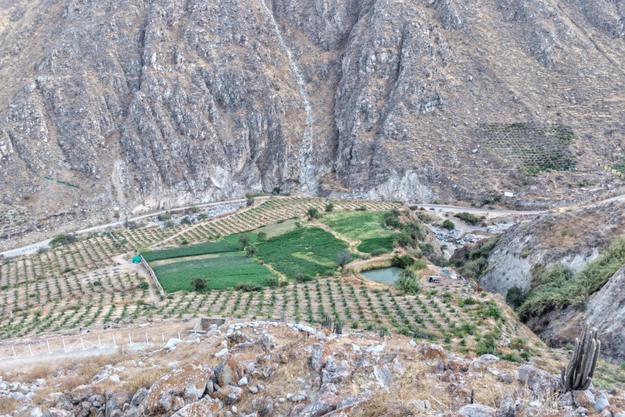
Westfalia is involved in more than just exports. It works closely with farmers year-round. In the highlands, the company partners with over 350 small-scale growers with plots ranging from 1 to 5 hectares. These producers are integrated into certification programs like GlobalG.A.P. and Rainforest Alliance. "We offer them technical support, pre-audits, and training seminars. Supermarkets are increasingly demanding when it comes to sustainability and working conditions," explains Sánchez.
 © Westfalia Fruit
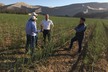
In the highlands, the company partners with over 350 small-scale growers with plots ranging from 1 to 5 hectares.
The approach on the coast is different. There, Westfalia works with large-scale producers managing 700 to 1,500 hectares. "They deliver between 40% and 80% of their production to us. We connect them with markets while they focus on growing. It's a complementary relationship."
Extending the season with late-harvest varieties
To lengthen its marketing window, Westfalia is investing in late-season cultivars like Gem and Lamb Hass. "Gem is harvested in August, Lamb Hass in September. Both produce well, though the fruit is large, which can be a downside in a saturated market."
Due to phytosanitary restrictions, these varieties are only sold in Europe. In 2025, Westfalia exported 30 containers of Gem and 5 of Lamb Hass. "It's less than 5% of our total volume, but it helps us stay active toward the end of the season," Sánchez says.
Beyond avocados: a growing product portfolio
Avocados account for 85% of Westfalia's business, but the company is steadily expanding. "Mango is now our second-largest product, and it's growing steadily. We also trade mandarins from the same partner growers we work with on avocados," she notes.
Blueberries are still in the testing phase. "We're trialing new genetic lines and supporting smaller projects in the south. We're currently evaluating a new variety from Fall Creek that doesn't yet have a commercial name."
 © Westfalia Fruit
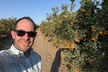
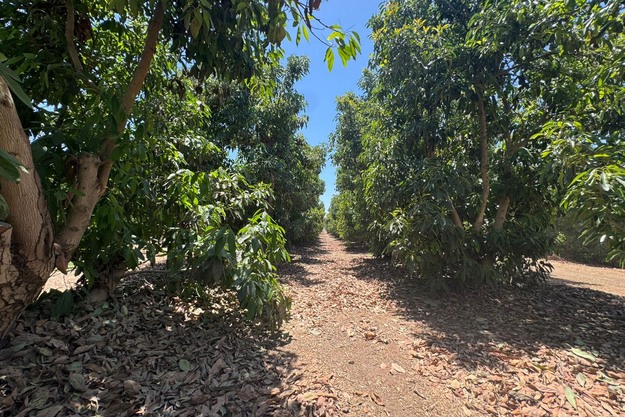
"The trees had a recovery year in 2024, which helped improve production in 2025," explains Esther Sánchez Hernández.
Adding value through industrial processing
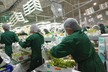
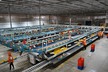
One of Westfalia's most ambitious projects is its expansion into industrial processing. The company already has its own packing facility in Cañete, where it also produces avocado oil. "We use the whole fruit, pits and skins included, and process second- and third-grade avocados."
A new frozen processing plant is also under construction in Chiclayo, set to open in June 2026. "It will handle IQF avocado and mango, as well as avocado pulp using HPP (High Pressure Processing) technology," Sánchez reveals. "Demand for avocado-based products is growing fast. It's not just about fresh fruit anymore."
Looking ahead to 2026, Westfalia aims to grow by another 10% to 15%, in line with the overall sector. "We plan to expand our network of small producers in the highlands, strengthen our presence along the mid-coastal regions, and keep investing in late-season varieties," Sánchez concludes.
For more information:
Esther Sánchez Hernández (Commercial Manager)
Westfalia Fruit Peru
Av. Alfredo Benavides 768 – 6th floor
Miraflores, Lima (Peru)
Tel.: +51 1 243 7840
[email protected]
www.westfaliafruitperu.com