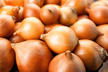
The Department of Agriculture has increased the maximum suggested retail price for red onions to 150 pesos (US$2.63) per kilo, up from 120 pesos, effective December 11. The revision follows higher export prices from major supplying countries and rising import costs driven by the weaker peso. Using the current exchange rate, the new ceiling is about US$2.63 per kilo, compared with the previous US$2.10 per kilo.
The SRP for yellow onions remains at 120 pesos per kilo, with the agency stating that supply conditions and earlier price computations continue to support the current level.
Agriculture Secretary Francisco Tiu Laurel said the updated ceiling is aligned with current market conditions. "The adjustment reflects market dynamics. I have received information from international sources and local importers about increases in the prices of red onions from their origin," he said, adding that China, Holland, and India have reported higher export prices.
He noted that currency movements have added pressure to landed costs. "The weakness of the peso against the U.S. dollar is also part of the equation," he said.
Tiu Laurel called on traders and retailers to observe the updated SRP, with demand expected to rise during the Christmas season. "We are hoping everyone will cooperate to ensure stable prices and supply given the demand during the Christmas season," he said.
He also emphasized the need for a broader sourcing base. China remains the dominant supplier for Philippine onion imports, and the department is exploring additional origins to reduce dependence on a single source. "We do not want to be dependent on just one source," he said.
According to the agency, all onion importation will halt by January. Domestic harvests will begin in February, and the timing is intended to prevent imported stocks from affecting farmgate prices and to support local growers entering the harvest period.
The Department of Agriculture expects that the SRP adjustment, combined with diversification of suppliers and a defined import schedule, will help stabilize prices and maintain adequate supply in the near term.
Source: DA