For its papaya supply, the U.S. and Canada largely depend on Mexico. "Mexico provides about 85 percent of the market in North America," says Andrés Ocampo with HLB Specialties. This is followed by Central America (12-13 percent) and, to a lesser extent, Brazil & Hawaii (1-2 percent). Together, these regions and countries offer papayas year-round, although production levels fluctuate throughout the year.
Mexico stepped up its game
Guatemala and Belize in Central America used to supply almost 25 percent of papaya volume in the U.S. and Canada. However, around the start of the pandemic, the Papaya meleira virus (PMeV) caused significant losses in production. As a result, Central America is nowadays estimated to provide about 12 percent of the market in North America. While the papaya industry in both countries has slowly been recovering, Mexico really stepped up its game in the meantime. In the past, it dealt with salmonella contamination in papayas, but stringent and effective techniques have resulted in no foodborne illness cases in recent years. "In addition, better varieties have been planted and these two factors combined, have resulted in a continued acceptance of Mexican papayas in the market," commented Ocampo. "Confidence has really built up in recent years."
 © HLB Specialties
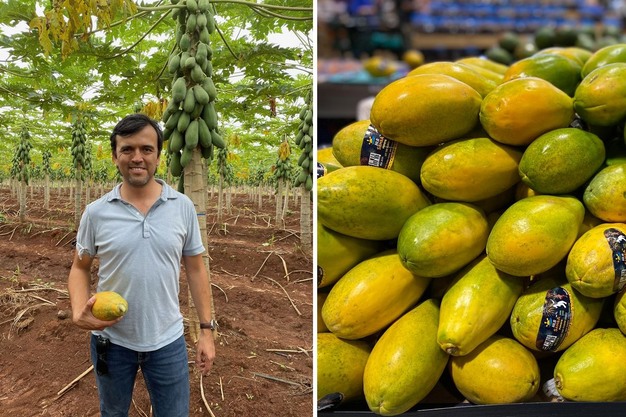
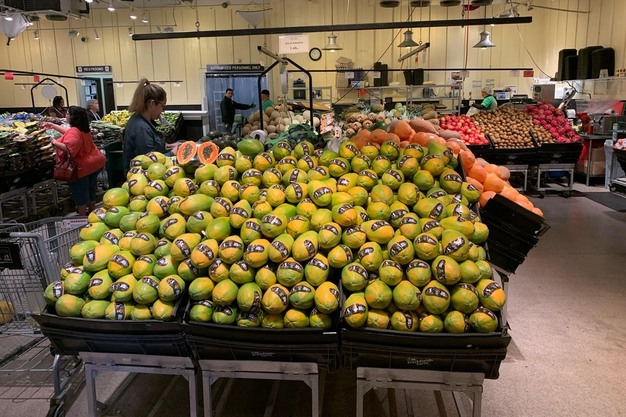
left: Andrés Ocampo. Right, colorful display of papayas.
Displays with color
The positive story continues as consumption has also shown consistent growth. "Ten to fifteen years ago, papayas were in the news for bad reasons, but nowadays, it is difficult to find a retailer that doesn't carry them." More recently, retailers have started to display papayas with more color and a higher maturation. As a result, the fruit looks more attractive, and retailers sell a higher volume, generating a positive impact on the dollar value per square foot. With the results being so evident, more and more retailers believe in the fact that showing color is the correct way to display the fruit. "This is the biggest change in recent years and has really helped drive consumption," Ocampo shared.
While papaya consumption shows overall growth, demand tends to slow down this time of year. "During the Thanksgiving, Christmas, and New Year's holidays, there always is a dip in demand, but it picks up as soon as the New Year has started and New Year's resolutions kick in." The dip in demand coincides with a slowdown in production in the northern hemisphere. "We're at the tail end of the rainy season and coupled with colder weather, production is on the lower end this time of year."
From the southern hemisphere however, Brazilian papayas are arriving with very nice color. It is summer in Brazil and as a result, the fruits naturally arrive with somewhat higher maturation. They are ready to display and sell-through has been very good. The Samba Papaya variety from Brazil is especially popular during the December and January holidays. "With Lunar New Year approaching, it's customary for Asian consumers to present premium fruits as gifts, and the Samba Papaya is an appealing and meaningful choice."
 © HLB Specialties
Overall, the industry feels fortunate about this year's growing conditions and production levels. They were favorable in all growing regions as both summer and fall were quiet in terms of hurricane and rain activity.
 For more information:
Andrés Ocampo
HLB Specialties
Tel: (+1) 954-475-8808
[email protected]
www.hlbinfo.com