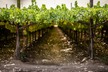
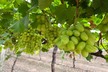
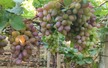
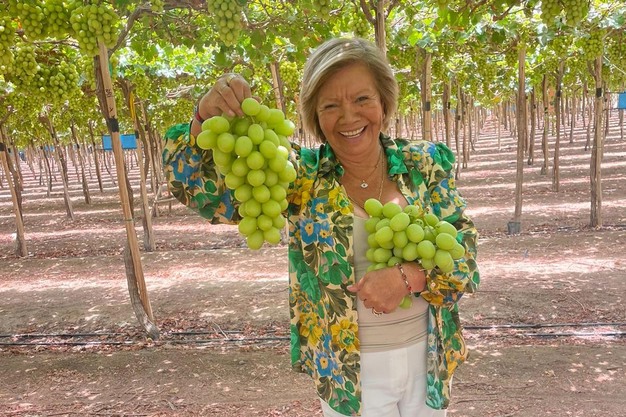
Starting from a modest nursery in Chincha, Mercedes Auris Bravo has been a driving force in reshaping Peruvian agriculture since the 1990s. Her dedication was pivotal in expanding table grape cultivation and introducing licensed grape varieties to the country. Today, her nursery is Peru's leading producer of grapevines and is pushing the boundaries further with blueberries, citrus fruits, avocados, vegetables, and forward-looking crops like almonds and cherries.
Humble beginnings in the Andes
Mercedes was born into a humble family in the Peruvian highlands. As a child, she sold handmade goods to help make ends meet. Out of necessity, she developed a strong entrepreneurial spirit. "I always dreamed of studying architecture or civil engineering, but I couldn't afford it. Agronomy was the only thing within reach," she recalls.
 © Viveros Los Viñedos
She enrolled at San Luis Gonzaga University in Ica, where being a woman in a male-dominated field brought discrimination. But rather than give up, she discovered her passion for hands-on work and plant propagation. "I worked in fields and nurseries at the San Camilo experimental station in Ica. That's where I started to see the future of Peruvian agriculture," she says.
Her mentors helped shape a clear vision: Peru had the potential to become a global leader in grapes, citrus, and avocados. That idea stayed with her.
Terror and transformation: A life-changing journey
In the late 1980s, while working at a nursery in the jungle focused on citrus and avocado trees, terrorism struck violently. "They attacked the station, set it on fire. I was kidnapped and beaten," she says calmly. That moment changed everything. She decided to leave, seek education abroad, and with no money, applied for a scholarship to study grapevine management in Spain.
In 1993, she arrived in Jerez de la Frontera with just $200. "I went with faith and determination. I had nothing, but I knew I could learn." While there, she immersed herself in advanced propagation techniques and realized Peru needed a specialized nursery for table grapes.
 © Viveros Los Viñedos
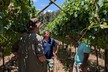
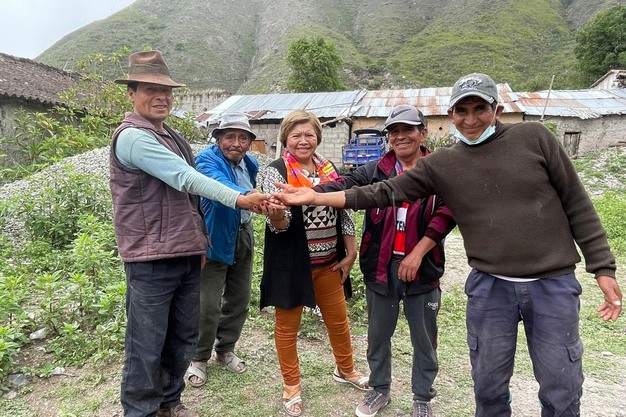
Mercedes taking avocado plants to the highlands.
The birth of Viveros Los Viñedos
Back in Peru in 1994, Mercedes founded Servicios Agrícolas Vivero Los Viñedos with just 2,000 grapevine seedlings. At the time, local grape production was mainly for pisco, a Peruvian grape brandy. But Mercedes saw an opening: "I saw the potential of table grapes. We started by importing varieties from Chile: Red Globe, Thompson, Crimson, and Flame."
Soon, she faced a major challenge. "Peruvian soils were full of nematodes and phylloxera. Ungrafted plants couldn't survive." Her solution was to import rootstocks from France and the University of California, Davis. That allowed her nursery to develop stronger, disease-resistant vines, marking a turning point for grape production in Peru.
Export boom and technical leadership
From 2000 onwards, grape exports from Peru skyrocketed. "Companies in Chincha, Ica, Piura, and Olmos began planting thousands of hectares," Mercedes explains. In 2002, Peru started exporting Red Globe grapes to China, fetching prices of up to $50 per 8.2 kg box.
In 2007, her nursery organized a demonstration plot in Piura that drew nearly 470 participants. "That event was key to expanding grape production in the north. We later repeated it in Olmos and Arequipa," she recalls.
A strategic shift to licensed varieties
But in 2013, Red Globe prices collapsed, from $50 down to $12 per box. "It became clear we needed to change varieties. The market was asking for seedless grapes, with high fertility, easy management, and better yields," she says.
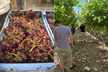
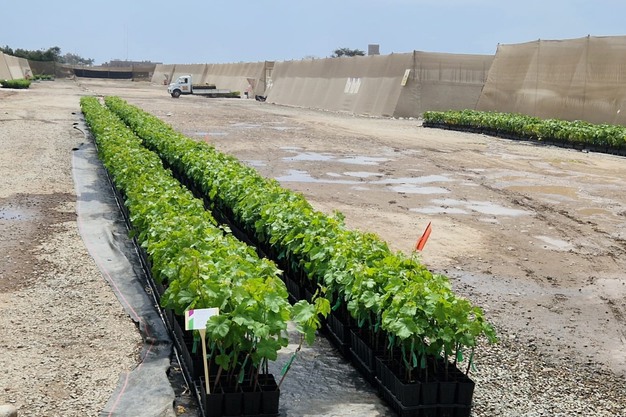 © FreshPlazaAllison table grape plants ready for delivery. A truck can carry 7,500 plants, spread over three floors.
Thanks to her international contacts, Mercedes secured licenses from major breeders like Sun World, SNFL, IFG, ARRA, ANA Chile, and ITUM. From 2014 onward, her nursery led Peru's transition to licensed grape varieties. "Today, Peru has 22,600 hectares of licensed grapes, and 75% of those plants came from our nursery," she notes proudly. It's no surprise she's now known as la señora vid—the grapevine lady.
Chincha: The heart of her operation
Though she tried setting up nurseries in Trujillo, Piura, and Arequipa, only Chincha offered the right conditions: high humidity and a stable climate. "From here, we supply the entire Peruvian coast, from Tacna to Piura," she says.
The nursery employs 500 people, making it a key economic player in the region. "We've grown through hard work, and through a deep belief in the enormous potential of Peruvian agriculture," Mercedes says.
Looking beyond grapes: Diversifying for the future
Today, 70% of the nursery's output is still focused on grapes. "Table grapes will keep growing, especially with the varietal shift. While Thompson yields around 2,500 boxes per hectare, Autumncrisp can produce up to 5,000," she explains.
 © FreshPlaza
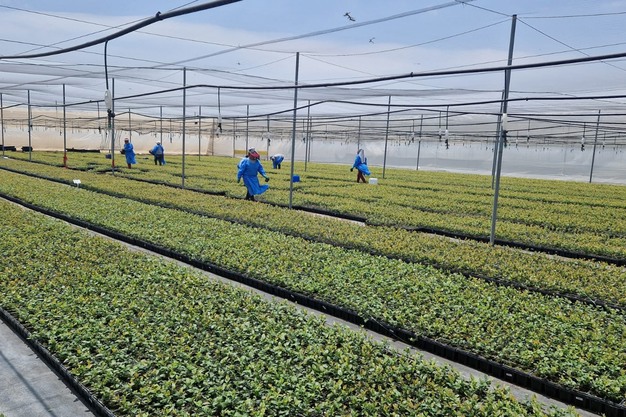
Blueberries account for 10% of the propagation at Viveros Los Viñedos.
But the nursery is also expanding into other crops. Blueberries make up 10% of propagation. Despite licensing challenges, the nursery is developing new varieties through partnerships with emerging breeders. For citrus, like mandarins and tangelos, propagation is done on request, mainly for highland areas. "We're licensed by Eurosemillas for varieties like Tango. Mandarins are easy to eat and sell well. We even donate plants to help coastal communities harvest in the off-season," she says.
They also grow avocado plants on demand, particularly for highland areas that benefit from unique market windows. "We're part of Green Motion, an innovative breeding program for new avocado varieties," Mercedes notes.
In 2022, the nursery produced artichoke seedlings for 500 hectares, and by 2025, that figure had jumped to enough material for 2,200 hectares. "It's a great crop for export, though it depends heavily on land availability," she explains.
Crops like pistachios and almonds reflect a forward-thinking approach, aiming for mechanized agriculture in new areas like Majes-Siguas II, which is expected to develop thousands of hectares, but with limited labor availability.
A blooming dream: The Peruvian cherry
Mercedes's newest passion project is introducing cherry cultivation in the highlands, in regions like Ayacucho and Huancayo. "The goal is to create producer cooperatives and sustainable incomes," she explains. Talks are starting with the Inter-American Development Bank (IDB) to fund a high-density production model and build a local packing facility. "The Peruvian cherry could be a game-changer. If we can bring it to market in September, ahead of Chile, that changes everything," she says with excitement.
 © Viveros Los Viñedos
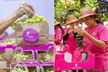
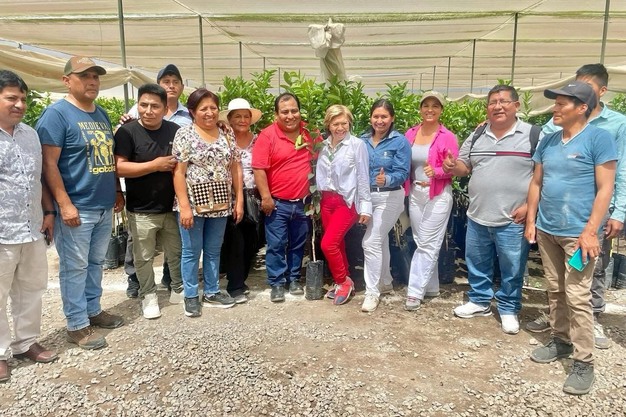
Mercedes donating W. Murcott mandarin plants in the department of Huancavelica, her homeland.
A social mission: planting seeds for the future
Beyond business, Mercedes is deeply committed to rural development. She's donated thousands of plants to Andean communities in Huancavelica and Ayacucho. "I want small farmers to access profitable crops. I give talks, advice, and plants whenever I can. It's how I give back. Agriculture can be a real driver of social change. I've lived it, I've seen it, and I want others to experience it too," she concludes.

For more information:
Mercedes Auris Bravo
Vivero Los Viñedos SAC
Panamericana Sur km. 201
Chincha Baja 11750 (Peru)
Tel.: +51 959 391 771
[email protected]
https://vlv.pe/