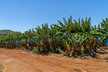
In Brazil, the Cavendish banana is widely known as the "nanica" banana, despite its long fruit shape. Researchers explain that the name reflects the height of the plant rather than the size of the fruit. Edson Perito Amorim of Embrapa Cassava and Fruit Crops says the term is a misconception. "Although its fruits are large and long, the plant is short and smaller than other varieties. The adjective, then, describes the plant, but not the fruit that we consume."
Plant height influences grower preference. While plantain and silver banana plants can reach five to seven meters, the dwarf Cavendish plant generally does not exceed three meters. Amorim notes the shorter stature supports crop management and reduces toppling risk in strong winds.
The Cavendish subgroup, originally from southern China, spread globally in the mid-19th century when early plant material was taken to England and later moved into tropical regions. Researcher Ramon Felipe Scherer of Epagri says that although varieties may be called "Giant Cavendish," "Dwarf Cavendish," or "Grand Nain" internationally, Brazil adopted the name "nanica" as a common reference.
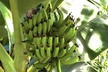
Fruit size is not linked to plant height. Genetic traits determine whether Cavendish fruit develops in an elongated form, and the dwarf Cavendish plant produces bunches with large fruit. Key characteristics include a yellow peel that darkens during ripening, thick and slightly curved fruit, soft and sweet pulp, and an aroma typical of the Cavendish subgroup.
The Cavendish banana is commercially recognised worldwide and is the main export banana for markets including the United States, the European Union, Russia, and Japan. "In those places, talking about bananas means talking about 'Cavendish bananas,' because they don't go by other common names as they do here," Scherer says.
In Brazil, cultivation patterns differ from consumer expectations abroad. The white variety from the Prata subgroup represents 55 per cent of the planted area and leads national consumption. The dwarf Cavendish follows with about 25 per cent of production, concentrated in Santa Catarina, Paraná, and São Paulo. Remaining volumes include plantain, fig banana, apple banana, and golden banana.
The distinction between plant height and fruit size continues to shape commercial terminology, production choices, and consumer perception within Brazil's banana sector.
Source: Globo Rural / Abrafrutas