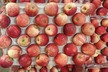
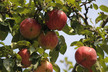
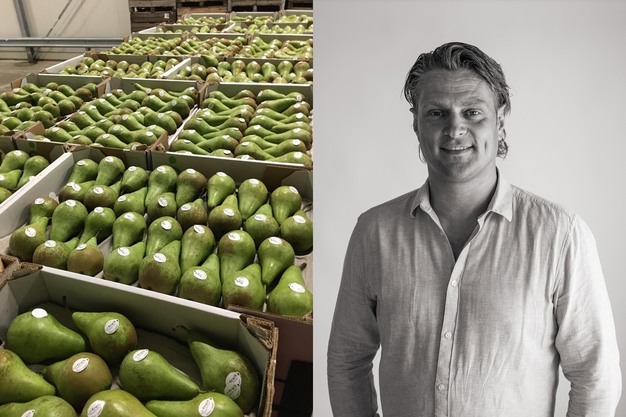
"Pear sales are going reasonably well at the moment. Sufficient volume is moving, but prices this season are significantly lower than last year. This price pressure marks the mood in the market and calls for extra sharpness in the chain," says Mark Vernooij of Urfruit. "Interestingly, the flavour of pears is exceptionally good this year, thanks to the high sugars. At the same time, those same sugars have an effect on shelf life and firmness. Throughout, the pears are softer and more delicate than we would like, and this requires a lot of attention in sorting, packing, and delivery."
 © UrFruit
We also see this reflected in our own plots in North Holland. Firmness is lower than ideal, although we are still on the better side compared to other monitored lots. Still, the principle remains that a cold store is not a hospital; pears do not come out better than they go in. This season calls for intensive monitoring and timely decisions.
 © Urfruit
Started picking a week late
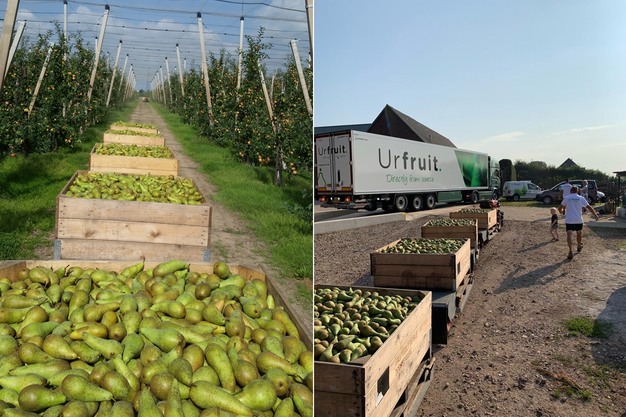
"An important signal this year is that, in our opinion, picking started about a week late in the Netherlands and Belgium. We clearly see this reflected in the quality of the product that was harvested too late: flowering pears, yellow pears, and pears with tint are concrete examples. The later picking did lead to a higher yield per hectare; the extra kilos per tree are noticeable. But that higher yield has a detrimental effect on the price per kilo, especially in a market that is already under pressure. In addition, fruit harvested later turns out to be less stable in storage," says Mark.
"For our sorting company, this requires a lot of discipline. It is top sport to sort these late-picked pears properly and to ensure that the yellow and soft pears do not end up in the retail streams, but with the processing industry. This requires extra labour, stricter selection, and keeping all lines constantly sharp. From the second week of the picking window, we are also seeing a higher number of incidents this season than in previous years. For growers with three weeks of Conference, caution in marketing strategy is more than wise. For this type of fruit, December, for example, is already becoming a challenging month."
 © Urfruit
Buyer confidence crucial
"In practice, we notice that there are already batches that would have been better processed a month earlier. The low prices tempt us to hold on to fruit longer in the hope of a better market. But this season, quality does not allow that as much. When buyers become uncertain about the stability of the product, they become more cautious. This inhibits the market and ultimately leads to more fruit being left lying around that really should already have been processed. Buyer confidence is crucial; without it, the chain clogs up."
 © Urfruit
"All this requires discipline. It is important to remain realistic about the hardness on entry, to monitor those cells tightly, and to decide in time whether a batch should be processed, sold, or culled. This year's conditions give little room for guesswork. The product demands sober choices based on quality rather than price expectations," Mark continued.
 © Urfruit
"In summary, we are seeing a season where sales are continuing reasonably well, but prices are clearly lagging. The taste of the product is excellent, but the lower hardness and shorter shelf life require maximum alertness and honesty in the chain. If we as an industry act on time and ensure that buyers can remain confident, we can shape this challenging season properly," concludes the fruit trader.
 For more information:
Mark Vernooij
Urfruit
Raadhuisstraa 2A,
7251 AB Vorden
Tel: +31 (0) 575 472 473
[email protected]
www.urfr uit.nl