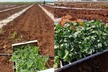
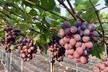
A sharp drop into single-digit temperatures, reaching 8–10°C, is affecting early grape and vegetable production zones in Maharashtra. Growers are reporting berry cracking, delayed harvests, and concerns over crop quality. The Nashik district, particularly the Satana belt, is entering the early harvest window but is facing the combined effect of extended monsoon conditions followed by sudden cold.
Bharat Jagannath Sonawane, director of the Maharashtra State Grape Growers' Association, said the combination of low temperatures and heavy dew is affecting fruit integrity. "The incidence of dew and surface sugar deposits is causing hairline cracks on the berries. When humid, these cracks catch fungus," he said. Satana cultivates roughly 485 hectares. "Normally, we get 10 tons per acre. The extended monsoon had already halved yields to 5–6 tons. Now, even this reduced crop is cracking. Some plots have seen up to 100 per cent damage," he said.
Export programmes have been affected. Shipments to Russia are not feasible, and domestic deliveries to Delhi are also facing challenges, with cracked fruit during transit due to cold conditions in the capital.
Balasaheb Gadhak, president of the association, said vine physiology is being impacted. "In the Nashik region, especially around Satana, farms are seeing delayed vegetative growth. Cold affects pruning because vines respond to wounds much more slowly in low temperatures; sap flow reduces, and callusing is delayed. This slows the entire growth cycle and could push the fruiting period further," Gadhak said.
Growers in other sub-regions are reporting similar issues. Ketan Kiran Khapre from Niphad said early rains had already affected output. "Early rains had already cut production by 70–80 per cent. Now, the severe winter is causing bunch and stem necrosis, slowing photosynthesis and fruit setting. Even where fruit is set, berry enlargement is poor," Khapre said.
Vegetable crops are experiencing stress as well. According to Santosh Sahane, technical director of the Vegetable Growers Association of India, the sudden temperature decline induces physiological stress that may reduce yields. Market prices may see modest increases in the next 15 days, although the large planted area across the region is expected to stabilise overall supply.
Banana growers are also reporting difficulties. Bhagwat V. Patil, president of the Banana Growers' Association of India, said consumption falls during cold periods and fungal infections are appearing in Jalgaon and parts of Madhya Pradesh. "Banana crops are currently in the ratoon stage. These are highly sensitive to temperature extremes. The present cold is making them vulnerable to fungal attacks and growth slowdowns," Patil said.
Nashik district has approximately 70,820 hectares of grape cultivation. Early harvesting currently covers around 1,215 hectares in the Satana belt, while the main harvest on the remaining area is expected to begin in January.
Source: The Times of India