Argentina's fruit sector continues to adjust after years of economic instability, high production costs, and weak profitability that reduced exports and led to a contraction in key regions. The current government has focused on economic stabilization, reducing inflation, and restructuring public spending, though recovery across agricultural sectors remains slow.
The citrus industry reflects these fluctuations. Years of crisis reduced cultivated areas and export volumes, particularly for lemons. Production declines were compounded by global oversupply, leading to falling prices and financial strain in Tucumán, the world's largest lemon-producing province. Many orchards were removed, and several packing and industrial facilities closed.
Fresh lemon exports fell to 170,000 tons in 2024, the lowest level in years. However, reduced northern hemisphere production has supported a partial recovery in 2025, with exports projected at around 215,000 tons, up 26% from 2024. Shipments to Europe and Russia have increased, offsetting lower volumes to the United States. Despite the rebound, exports remain below the 250,000 tons typical between 2015 and 2022. Lemon processing remains stable, with around 1.4 million tons expected to be crushed this season.
Mandarin and orange production have faced ongoing difficulties. The mandarin sector, once an important exporter, is now largely focused on the domestic market due to high internal costs, lack of trade agreements, and limited varietal renewal. Exports are minimal, with small volumes shipped to Russia, Canada, Southeast Asia, and, more recently, Brazil. European markets have been lost, and the US remains closed to imports. Adverse weather, including hail and frost, further reduced production in recent campaigns. Current mandarin exports are estimated at 24,000 tons, below historical averages of 30,000 to 50,000 tons.
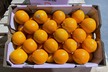
In oranges, industrial processing has expanded amid global juice shortages from Brazil and the U.S., driving higher demand for fruit destined for processing. Fresh orange exports remain limited, accounting for only about 6% of total production. In 2025, exports are forecast at approximately 75,000 tons, with the European Union receiving around 20,000 tons annually and Paraguay purchasing lower-quality fruit for re-export and local consumption.
Overall, Argentina's total fresh citrus exports are projected to exceed 310,000 tons in 2025, up from below 300,000 tons in 2024 and 2023. Still, export volumes remain well below the 350,000 to 400,000 tons recorded in earlier years. Future growth will depend on continued economic stabilization, investment in new varieties, cost reductions, and improved labor and trade conditions.
Source: TopInfo