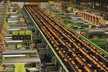
Lemon producers in Michoacán are facing increasing extortion from organized crime groups that have turned the state's lemon industry into a source of revenue through forced payments. The murder of grower and activist Bernardo Bravo has heightened fear among farmers in Apatzingán, one of Mexico's main lemon-producing regions.
Bravo, president of the Apatzingán Valley Citrus Growers Association, was found dead with a gunshot wound to the head near Apatzingán after publicly denouncing extortion by criminal groups and calling for protests over low farmgate prices. Days before his death, he had organized demonstrations where farmers threw lemons into the streets and proposed harvesting only three days a week to control supply.
Farmers report that criminal groups now demand about four pesos (US$0.22) for every kilo of lemons harvested, double the previous rate. Local producers say the payments have existed since the late 2000s but worsened after the entry of the Jalisco New Generation Cartel (CJNG). "Before, they took ten cents from us, or fifty cents at worst, a modest fee. Now that many cartels have emerged, things are much worse," said Antonio Mendoza, a farmer from the region.
The Human Security Observatory of the Apatzingán Region notes that extortion has become more profitable than drug trafficking. "Extortion is easier than the drug business. You don't need precursors, laboratories, or even to cross the border. You instill fear, and it's productive," said Julio Franco, who monitors the violence. He added that the system of quotas now extends beyond lemons to basic goods such as tortillas, eggs, milk, and alcohol.
In Michoacán, organized crime controls an estimated four-peso tax per kilo of lemons, equivalent to US$217 million annually. The state produced around one billion tons of lemons last year. Prices for lemons can fluctuate sharply, rising to 153% during shortages but often falling to 20 pesos (US$1.10) per kilo, while farmers receive as little as five or six pesos (US$0.28–0.33).
Groups such as Los Viagras and the CJNG are competing for control of the territory. Authorities have linked members of Los Viagras to Bravo's murder. The group, led by Nicolás Sierra Santana, also known as "El Gordo," is wanted by the United States, which has offered a reward of up to US$5 million for his capture.
Local legislator Guillermo Valencia, who had supported Bravo's proposals for farmer protection, said his killing could end recent efforts to resist cartel control. "The quotas will continue, and the only ones who will mourn Bernardo's death will be his family, his wife, and his son," he said.
Farmers in Apatzingán say they now fear further reprisals but recognize that silence will not protect them. "It's time to speak out," said Mendoza. "Bernardo, a colleague of ours, died for a reason, and it shouldn't go unpunished."
Source: EL PAIS