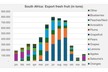
The European Commission is considering legal action against Poland, Hungary, and Slovakia for continuing to block imports of Ukrainian agricultural goods, according to Politico.
Sources indicate that Brussels has not ruled out referring the matter to the European Court of Justice after the updated EU-Ukraine trade agreement took effect. The unilateral bans imposed by the three countries, covering Ukrainian grain, fruit, and vegetable imports, violate EU single market rules that prohibit national trade barriers.
"We see no justification for maintaining these national measures," said European Commission Deputy Spokesman Olof Gill. In an email statement, Gill confirmed that the EU executive is increasing contact with the governments of the three member states.
The Commission has so far avoided confrontation, hoping that the revised trade framework with Kyiv would make the restrictions unnecessary. Officials familiar with the discussions note that political considerations also influence the response, as legal action against Poland could strain ties with Donald Tusk's pro-European government, while pursuing Hungary and Slovakia alone could raise concerns about inconsistency.
National positions
Poland's Ministry of Agriculture stated that its restrictions remain valid under national law and are not automatically lifted by the new EU-Ukraine agreement. Hungary's Agriculture Minister, István Nagy, said Budapest would maintain its national protections and accused Brussels of "prioritizing Ukrainian interests." Slovakia's Agriculture Minister, Richard Takáč, said the updated EU safeguards were insufficient to protect domestic growers, indicating Bratislava would also continue its restrictions.
Updated EU-Ukraine trade framework
On October 14, Ukraine and the European Union agreed to extend trade liberalization measures that remove or reduce tariffs on many Ukrainian agricultural exports. The new framework eliminates duties and expands quotas for products such as fresh fruit and vegetables entering the EU market.
The Council of the European Union approved the arrangement on October 28, with the decision entering into force on October 29 following the endorsement of the Association Committee on trade composition. The agreement aims to maintain Ukraine's access to the European market while supporting its agricultural sector amid ongoing trade disruptions.
Source: RBC-Ukraine