Raspberry production in Serbia during the 2025/26 season is well below average, according to Expana market sources. Following adverse weather earlier in the year, including severe frosts, total production is estimated at about 30,000 metric tons (mt), compared with an average of roughly 65,000 mt in recent years. The figure also falls short of the forecast released by the Statistics Bureau of Serbia in May, which projected more than 82,500 mt.
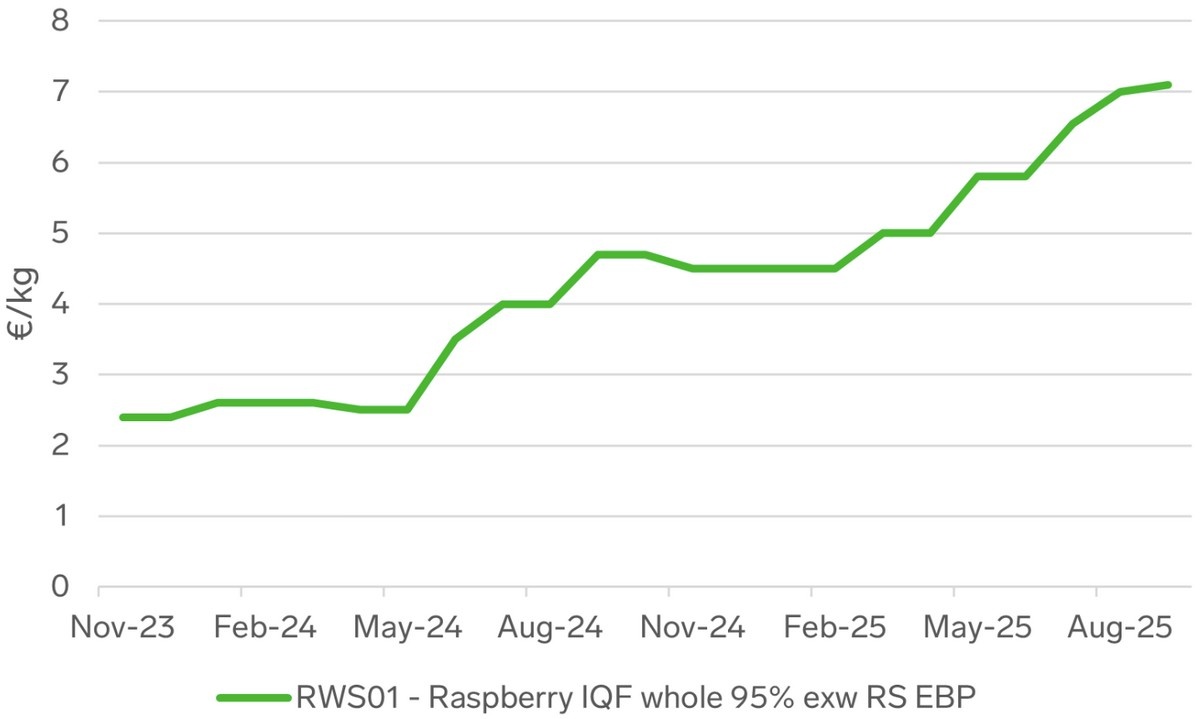
The reduced supply has led to higher prices since June. Expana Benchmark Prices (EBP) for Raspberry IQF whole 95% exw Serbia [Expana code: RWS01] stood at around US$7.63/kg (€7.10/kg) on September 30, up 51% year-on-year.
Weather disruptions throughout the first half of 2025 severely affected crop development. In April, frost events damaged up to half of the national crop, followed by a late snowfall in May and record-high temperatures in June, Serbia's hottest month on record according to meteorological data.
Serbia remains one of the world's largest suppliers of frozen raspberries by value, but the recent weather challenges have placed additional pressure on the sector. Some industry observers described the 2025/26 output as the lowest in three decades. Official production data have yet to be released, though market participants expect yields to remain consistent with the declining trend of recent seasons.
Beyond weather-related losses, the Serbian raspberry industry continues to face structural challenges. These include disease management, aging plantations, and reductions in the total area planted. These issues have compounded the impact of extreme weather on overall productivity and export volumes.
The reduced harvest comes amid strong international demand for frozen raspberries, a category in which Serbia has traditionally held a leading position. Exporters are expected to face limited availability through the remainder of the marketing year, while higher raw material costs are likely to maintain upward pressure on pricing across the frozen fruit supply chain.
Source: Mintec/Expana