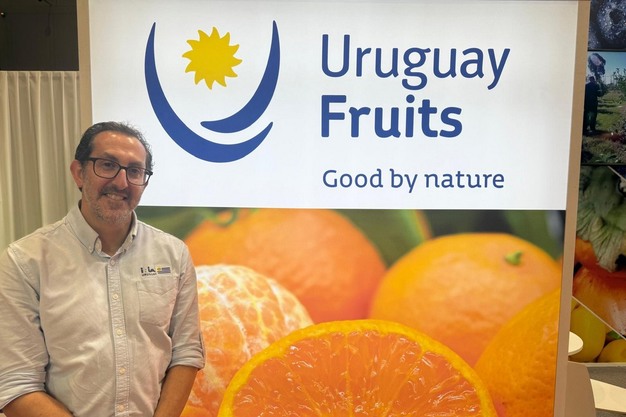
"After two decades of work in breeding and varietal development, Uruguay's National Institute for Agricultural Research (INIA) has introduced three new Valencia orange varieties that are expected to transform the country's citriculture and strengthen its position in international markets, revitalizing this segment. These varieties (Rufina, Paylate, and Victoria) originate from spontaneous variations found in the field and are notable for their quality, increased productivity, ease of handling, and organoleptic qualities that appeal to both growers and consumers," stated Dr. Fernando Rivas, head of INIA's breeding program.
 © INIA Uruguay
Rufina: Visual appeal and strong field performance
"The name Rufina means 'red-haired', so the Rufina variety's name is an allusion to its intense orange peel, a visual appeal that helps it stand out in the fresh market. Its harvest begins in July alongside the Midknight variety, and it can stay on the tree for three to four months without losing quality," he stressed.
Paylate: A disruptive variety offering the productivity and size demanded by the market
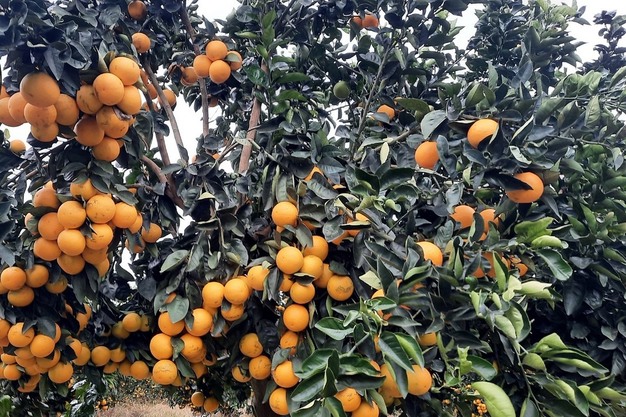
The Paylate variety, named after Uruguay's Paysandú department, is one of the most promising options for growers. "Its main advantage is its high productivity. It can produce 40 tons per hectare by its third year of cultivation, and over 60 in the fourth. Additionally, it mainly produces calibers above 70 mm, meeting the demands of the most competitive markets. Its harvest begins after the Midknight variety and lasts for several months. Paylate offers a clear and unique advantage in terms of production costs and yield. It is a very easy-to-grow, seedless, high-yielding variety with high juice content that requires less pruning and easily reaches commercial sizes. In addition, primary data indicate its excellent suitability for processing in the juice and oil industry," Rivas stated.
 © INIA Uruguay
Paylate
Victoria: Versatile with a balanced flavor
"Victoria, the third variety, is known for its late ripening (after Paylate), extended harvesting period, and versatility. It is suitable for the fresh market and for the processing industry. Its balanced flavor, high juice content, and seedless nature also make it appealing to fresh consumers," he highlighted.
These three varieties share traits that benefit the entire citrus industry. "They offer growers great yields per hectare and better crop management. In addition, as they are virtually seedless, they are very well received by the international market. In short, with Rufina, Paylate, and Victoria, Uruguay is taking a firm step toward a more competitive and sustainable citriculture in this segment," concludes Rivas.
For more information:
Dr. Fernando Rivas
Instituto Nacional de Investigación Agropecuaria (INIA) de Uruguay
Email: [email protected]