Bananas remain one of the cheapest fruits on the international market despite rising production costs. Prices have increased slightly in recent years, "but not at the same rate as other fruits, even those produced in Europe," stated Marike de Peña, the President of the Latin American and Caribbean Network of Fair Trade Small Producers and Workers (CLAC-Fairtrade).
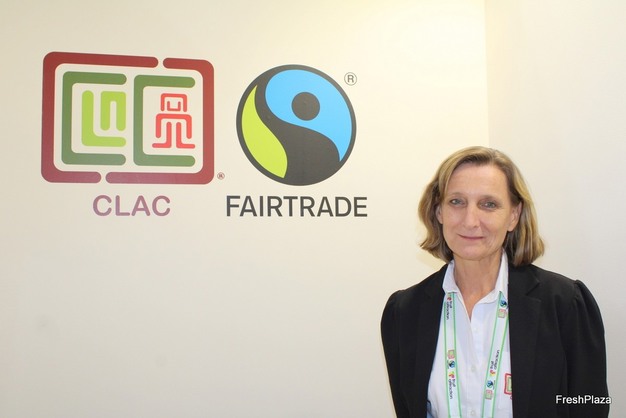 © Diana Sajami | FreshPlaza.com
"Bananas are still cheap, but production costs are rising," said De Peña. "If the price the producer gets doesn't cover compliance and certification costs, it becomes unviable," she added. Climate change has lowered productivity in many Latin American and Caribbean countries, while labor, logistics, and certification costs have risen.
Fairtrade is currently working on establishing minimum prices for producers and traders involved in Fairtrade products. For bananas, these prices act as industry benchmarks and reference points. "We want the producer to have their cost of production covered and the market to understand that real sustainability starts with a fair price," she stated. She also warned that many producers, particularly small ones, "are increasingly unable to sell their fruit at sustainable prices due to demand instability and challenges in recovering from climatic events, leading more small producers to be excluded from the production system."
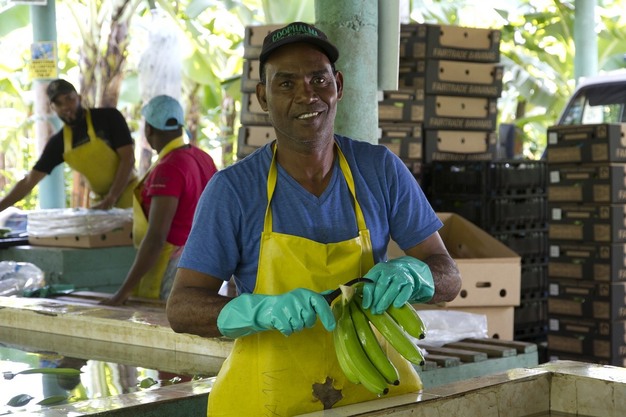 © Fairtrade
A key theme of the debate is the living wage, supported by various European supermarkets. "Progress has been made; data, gap analyses, and tools have been developed to assess workers' actual income. However, if prices do not match costs, a living wage cannot be sustained in the long run," she stated.
De Peña also emphasized that new European legislation on due diligence, sustainability, and deforestation has increased the demands and certification processes for producers and exporters. "The issue is not the regulation itself, but that the market fails to cover the costs of compliance. We need greater transparency about what's involved in meeting these standards and ensuring all standards are supported by a fair price," she said.
Faced with legal restrictions that prevent direct price negotiations among market participants, the CLAC representative recommends a more technical approach: "If discussing prices is restricted, let's focus on costs. Ultimately, the fair price should be based on the total costs."
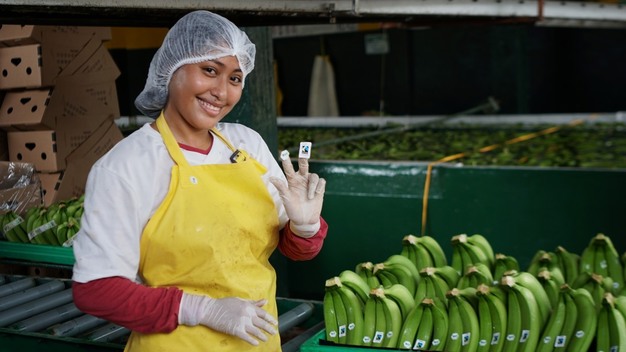 © Fairtrade
She also stressed that the Latin American banana sector often lacks the financial and technical resources needed to meet the new regulations. "We are committed to many initiatives, but without proper financial support and training, it is tough to fulfill the requirements," she added.
As a member of Fairtrade International, CLAC also promotes social campaigns in the sector, such as "Silence does not protect," launched at the Banana Forum in Santa Marta, Colombia. This campaign aims to prevent gender-based violence and harassment at work. "We want to foster a constructive dialogue on the farms and shed light on issues that have been previously ignored," De Peña explained.
The representative explained that the Fairtrade price isn't the highest, but the minimum needed to cover actual costs and start moving toward fairer, more sustainable production. The goal is to create an industry where producers, workers, and buyers share responsibilities. "Only prices that reflect real costs can secure a sustainable future for Latin American bananas."
For more information:
Marike de Peña
Fairtrade
Email: [email protected]
www.clac-comerciojusto.org