The Ecuadorian pitahaya's 2025 season has shown good results in the yellow variety, high variability in the red variety, challenges from climate change, and a focus on diversifying crops and markets. Major efforts include opening new markets, enhancing processes with technology, and starting production projects like rambutan and mangosteen to boost supply and seize strategic commercial opportunities.
 © Ecuaexotics
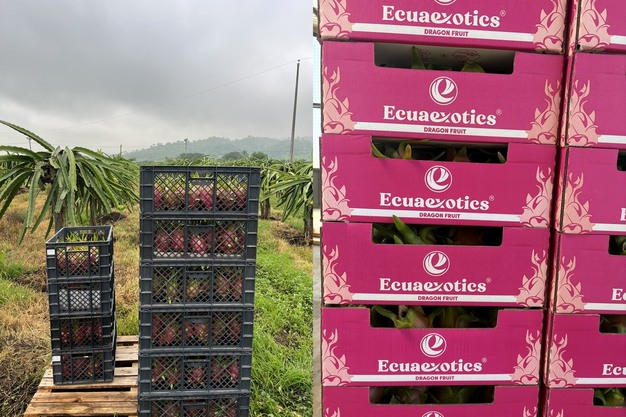
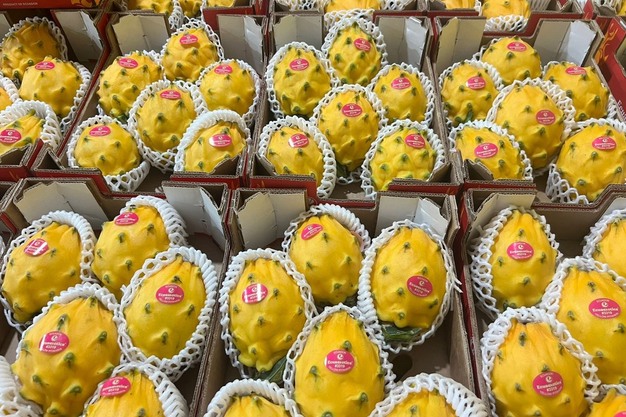
With over eleven years of experience, Ecuaexotics, a pitahaya exporter in Ecuador, produces and markets three varieties, yellow, white, and red, with a presence in the United States, Canada, and Europe. This year, the company has also expanded into the Chinese market. "It's been a very positive season for yellow pitahaya, with prices that have remained between 10 and 12 dollars per box. In contrast, red pitahaya has faced quite a different scenario. Some weeks, a box of red pitahayas cost 35 dollars, and in the following weeks, it fell to 10 due to the entry of fruit from Florida and Central America. Volatility has been the great challenge this season," stated Sebastian Bustamante, Ecuaexotics' CEO.
 © Ecuaexotics
The weather has also set the tone this year. Ecuador experienced one of the wettest winters in the past decade, which affected quality and production levels. "The seasons, which used to last eight or ten weeks, now only last four or five weeks because of heat waves, heavy rains, or unexpected cold," Bustamante stated. To mitigate these effects, Ecuaexotics has chosen to technify its crops and automate processes such as washing, drying, and waxing to improve yields, sizes, and quality, as well as reduce costs.
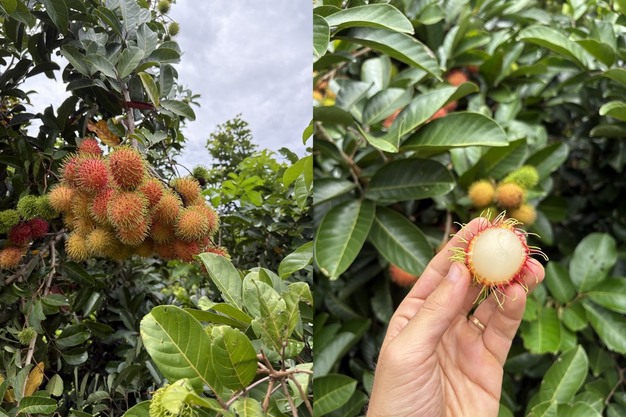
Production diversification remains a key focus for the company's future. The company started a 36-hectare rambutan pilot project three years ago. In November of this year, they will begin harvesting the first 6 hectares in production, and in 2026, they plan to harvest the remaining 30 hectares. The short-term goal is to establish 100 hectares of the R134 variety.
 © Ecuaexotics
"Ecuador's production window is different than that of Central America. That allows us to enter the markets when there are shortages in other origins. The goal is to mainly supply the United States, Canada, and Europe. However, the opening of the U.S. market still depends on phytosanitary protocols, which are already being analyzed and studied," the CEO stated.
At the same time, the company is developing a mangosteen project on another 40 hectares, a long-term crop that will take eight to ten years to reach full production. The first mangosteen harvests are estimated for 2028.
The competitive environment presents another challenge. Countries like Peru, Spain, Egypt, and Vietnam are increasing their pitahaya production, while China is advancing in developing local crops. Despite this, Bustamante sees opportunities in Asia: "The Chinese market is attractive, but we have to move carefully because their internal production introduces new variables in the negotiations."
By the end of 2025, Ecuaexotics will participate in Asia Fruit Logistica and Fruit Attraction Madrid to strengthen and promote yellow and red pitahaya, while testing the acceptance of rambutan and mangosteen in new markets.
 © EcuaexoticsFor more information:
Sebastián Bustamante
Ecuaexotics
Guayaquil - Ecuador
Tel: +593 997803339
Email: [email protected]
www.ecuaexotics.com