The tasting table was a post-lunch destination at Blueberry Field Day, hosted by Oregon State University (OSU) at the North Willamette Research and Extension Center (NWREC). Feedback on flavor, size, and firmness is collected for the OSU Berry Breeding Program, a joint initiative with the U.S. Department of Agriculture Agricultural Research Service, to help determine selections for potential new cultivars.
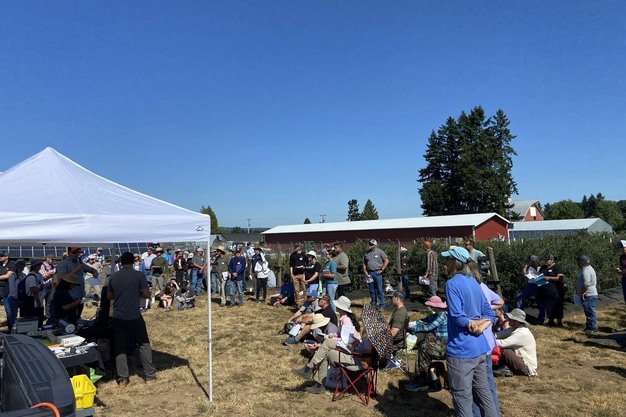
Oregon has around 320 blueberry growers, producing close to 160 million pounds annually, making it the second-largest blueberry-producing state after Washington. Among attendees were Alan and Jessica Stokke of Beach Family Farm, who operate an acre of blueberries for public picking each July. The couple joined the tasting to assess possible replacements for underperforming cultivars and toured the 'Mini Blues' field.
 © OSU Extention
The Stokkes have a history with OSU through extension publications and research led by the late Bernadine Strik, as well as participation in an OSU blueberry study involving test plantings. In 2024, a plant health issue led them to remove all berries from their bushes. With assistance from Wei Yang, OSU professor and leader of the blueberry education program at NWREC, they implemented new regimens, reporting improved plant condition this season.
Blueberry Field Day is part of OSU's annual series of berry-focused events in the Willamette Valley. The 2025 program included speakers such as Scott Lukas, endowed professor for Northwest berry production and management, and Steve Young, NWREC director. Topics included pollination and honey bee health from Ramesh Sagili and weed control research from Marcelo Moretti.
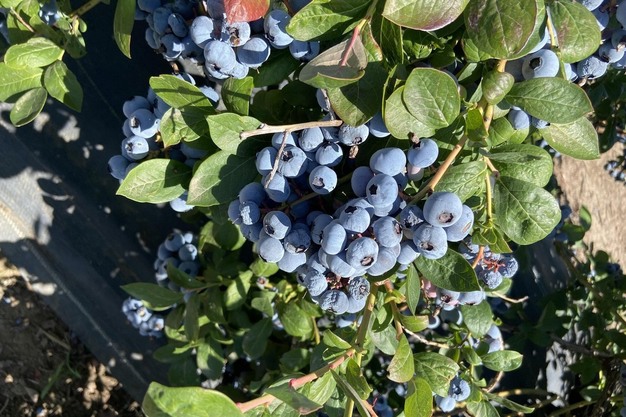
Food safety and mechanical harvesting were addressed by Jovana Kovacevic, associate professor and Extension food safety specialist at the OSU Food Innovation Center. She presented findings from a project on bacterial transfer during blueberry harvest. Using a non-pathogenic strain of E. coli to simulate contamination, the study examined whether bacteria from inoculated blueberries could transfer to a mechanical harvester and subsequently to non-inoculated fruit.
 © OSU Extention
Results showed contamination on harvester surfaces, especially the bottom conveyor belts and catcher plates, and on the next batch of clean berries. After cleaning and sanitizing the harvester according to industry protocols, bacterial levels dropped significantly, though some low-level contamination remained. "The bottom conveyor belt and catcher plates were most problematic," Kovacevic said. "If you are working with machine harvesters, the clear message from this one-season experiment is to pay close attention to cleaning and sanitizing those surfaces."
Future research will test sanitation strategies in the lab with E. coli and Listeria monocytogenes to determine effective cleaning methods for harvester components.
For more information:
Oregon State University
Tel: +1 541 447 6228
www.extension.oregonstate.edu