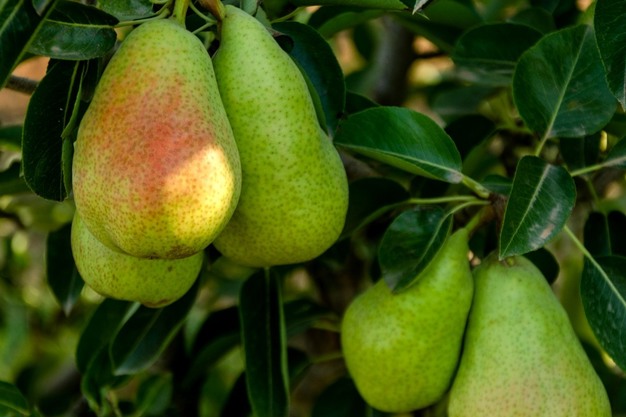
Albatarrech is a municipality in the Spanish province of Lleida with good conditions for the cultivation of pears, a fruit that is losing ground to stone fruit, but which continues to be highly appreciated in European and overseas markets.
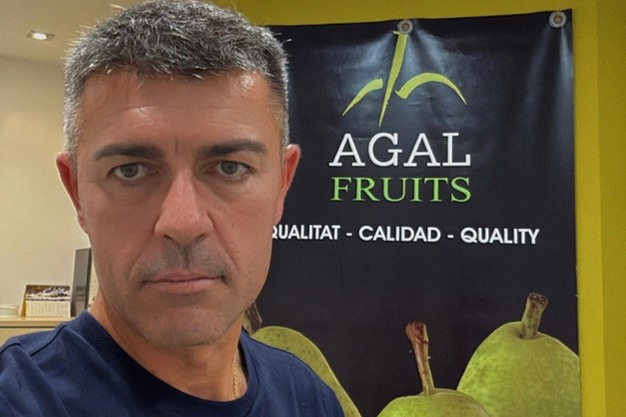
In contrast to the harshness of last year's pear season, "this year's rains have had a beneficial effect and prevented pests from spreading. We haven't had any hailstorms, and the heat has been just right. We are expecting a good pear season that will make up for last year's 40% decline," says David Clariana, Operations Manager for Agal Fruits.
 © Agal Fruits
Last season was marked by various events that took a toll on the production, including "the very poor flowering of the pear trees," which caused this "pronounced drop in production," says the manager.
After looking into what happened, "we are not really sure yet why it did, but it also happened in La Rioja. We suppose that the drought of the previous year, together with the heat during the flower bud formation period, led to a remarkable lack of these in February. The impact was severe because the insurance didn't provide coverage either, as the flowers had not been damaged. Of course, they hadn't even formed. So we were left with no production and no compensation. This year, we have already seen a large number of these flower buds, so we think the season is going to be a good one."
According to Clariana, "pears are not perceived as an essential fruit in the supermarket for various reasons. It's a very technical crop that requires a lot of professionalism on the part of the growers, who need to become very familiar with some pests and their biological cycles. It can take up to 5 or 6 years before pear trees become profitable, and you'll need about 28,000 kg per hectare. In the case of stone fruit, the crop produces high volumes in the third year, reaching an average of 40,000 kg per hectare."
"The early fruit from Murcia was severely hit by hail, and that from Lleida was also affected, and with the start of summer, with very high temperatures in Europe, and the fact that Greece, Turkey and Italy also have lower productions, demand this season is very high," says the manager.
 © Agal Fruits
"It was a necessary development"
In recent years, "we have optimized our work. We used to sell the fruit on pallets; now we handle it in our head office and distribute it directly to our supermarket clients in Europe and overseas," says the manager.
Ten years ago, they launched a forward integration process, moving away from the typical role of a cooperative and creating different departments to function like any other sales company.
"It was a necessary development. There's added value in working with the end customer. Some campaigns are better and some are worse. When it is good, the product practically sells itself, but if the demand is very low, working with an end client on the basis of a mutual commitment gives you the advantage of being able to sell those stocks during more difficult times," says Clariana.
At Agal Fruits, "we work with all the usual pear varieties, as well as a new one, Carmen, which we are harvesting at the moment. All pears go to either a European or an overseas market. The most important varieties are the Ercolina, Limonera, Williams, Conference, and Battle Red."
The main destinations in Europe are Austria, Poland, Germany, Sweden, etc. Overseas, "we work a lot with Brazil, where our Agal brand is highly valued, as well as Canada, Senegal, Costa Rica, and India. We supply around 8 million kilos of pears and 7 million kilos of stone fruit annually and employ around 160 people during the season. We have around 650 hectares of crops, mostly pears," says the manager.
"As operations manager, you have many tasks to accomplish. For me, a fundamental one is building a team and facilitating the work. I also believe that marketing the fruit of many families is a great responsibility," says Clariana.
For more information:
David Clariana
Operations Manager
Agal Fruits
Tel.: +34 653 22 74 11
[email protected]
https://agal.es