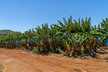
India's banana exports have increased over the years, from USD 25 million in 2010 to USD 250.6 million in 2023, as reported by APEDA. Despite being the largest producer, India's share in the global banana market is relatively small, at only 1.2% of total exports.
Main challenges hindering expansion include fragmented farming operations, insufficient cold chain infrastructure, and a heavy dependence on air freight. This contrasts with other leading exporters like Ecuador and the Philippines, who capitalize on cost-effective sea freight, thereby achieving better price and volume metrics.
A report by ICRIER-APEDA points to strategic developments, including the establishment of major export hubs in Jalgaon, Solapur (Maharashtra), and Anantapur (Andhra Pradesh). These hubs would feature end-to-end facilities like mechanized packhouses and reefer linkages, making it feasible for year-round exports.
Promotion of sea freight protocols presents another opportunity. A pilot shipment from CISH Lucknow to the Netherlands yielded encouraging outcomes, hinting at the feasibility of scaling this route.
To enhance competitiveness globally, the report calls for FTAs with the EU and the U.S. Current tariffs on Indian bananas can reach up to 26%, whereas Latin American counterparts face only a 10% duty. Additionally, adoption of sustainability certifications such as GlobalGAP and Rainforest Alliance could align with Western consumer preferences.
If strategically implemented, these initiatives offer the potential to transform India's banana sector, broadening access to markets across the EU, Russia, and ASEAN countries.
Source: Krishi Jagran