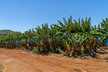
While India cultivates bananas year-round, two predominant seasons run from November to March and May to July. This year, early May rains caused severe setbacks to Maharashtra's banana growers, but demand for Yelakki and Cavendish varieties remains strong. Abhijeet Patil, a banana farmer in Solapur, Maharashtra, reports that unseasonal rains and winds cut yields by 25-30% this year.
Heavy rains in May created quality issues in the form of black spots and Sigatoka disease, damaging leaves and bunches. "Unseasonal rains and winds caused significant yield reductions by toppling plantations. This impacted quality and volume, with prices dropping 20% from last year," Patil explains. "Despite challenges, Solapur has surpassed Jalgaon as Maharashtra's top banana producer due to its ideal climate, rainfall and proximity to Ujani dam."
 © Trimurti Fruit Co
"The dam ensures steady water supply, while the region's balanced weather in the form of no extreme rain, sun, or cold, creates perfect conditions for growing bananas. With 3,000 acres of Yelakki plantations, Solapur meets strong domestic demand, with metro cities like Mumbai and Pune respectively consuming 250 MT and 50 MT daily," he adds. "Yelakki thrives during monsoon months, valued for festivals and nutrition benefits," Patil notes, emphasizing its popularity from June to November for cultural events and health benefits.
This season, export markets presented challenges for Patil's farm, which supplies Cavendish bananas to 15-20 Middle Eastern and Gulf countries including Dubai, Oman, Saudi Arabia, Iran and Iraq. "War-related tensions between Iran and Israel in June disrupted logistics, delaying 2000 containers and causing bananas to overripen in transit. These delays caused substantial losses for Iran-bound exports," Patil says, highlighting vulnerabilities of operating in volatile regions.
 © Trimurti Fruit Co
Looking ahead, Patil is optimistic about expanding into new markets. With support from the Agricultural and Processed Food Products Export Development Authority (APEDA), Solapur exported 20 MT of Cavendish G9 bananas to Russia last year, and other European countries are now expressing interest. "Buyers praise our bananas' quality, shelf life, and sweetness," Patil notes, emphasizing Cavendish's strong export potential and his farm's ambition to diversify its global reach.
Government support is vital. "Enhanced research on disease resistance and new varieties is essential to maintain quality and meet global standards. With only one government-sponsored institute in Tamil Nadu, India's banana sector needs more resources," Patil says. While Maharashtra's Yelakki and Cavendish varieties are poised to drive domestic and global markets, farmers seek assistance to improve varieties for tackling weather and export demand.
For more information:
Abhijeet Patil
Trimurti Fruit Company
Tel: +91 86 05 059 298
Email: [email protected]