Despite the distance, some Chinese fresh produce products effortlessly reach European markets. Ginger, garlic, and pomelos are perhaps the best-known examples. Chinese exporter Onedayone has had a sales office and storage space in the Netherlands for several years. That is to offer customers a smooth service, be easily accessible, and stay up to date with market dynamics in Europe. From Shanghai, Maggie Peng provides insight into how a Chinese trading company tackles far-away exports. © Onedayone Group
Onedayone turned 20 last year. In 2004, it began by exporting Fuji apples to a German client. These days, top fruit makes up only a fraction of the company's export pie. That product, though, opened the doors to the European market for a typical Chinese product that is increasingly being consumed in the West: ginger. Onedayone's product range on offer to Europe has expanded to include pomelos, mushrooms, garlic, and bok choy.
 © Onedayone Group
Dubai and Rotterdam
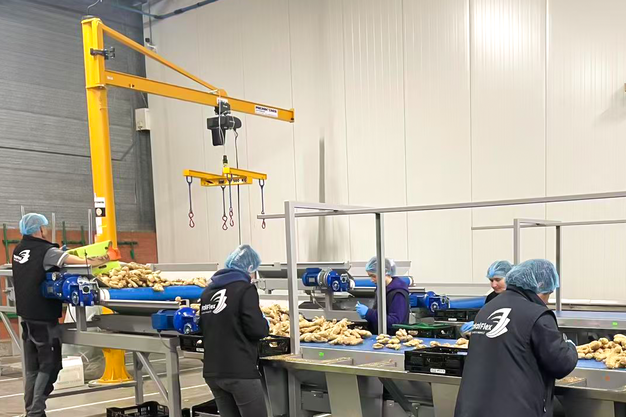
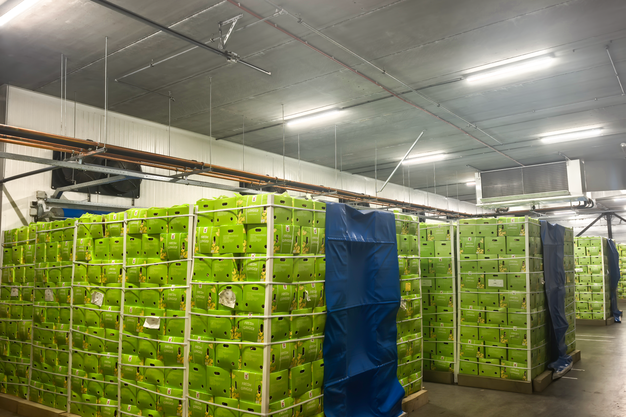
Yet Europe was not the first overseas region in which Onedayone established an office to be closer to its buyers. "It was in Dubai," begins Maggie. "We've been arranging deliveries to wholesalers and retailers in the Middle East from our storage facility and packing facility there since 2009. Rotterdam is the gateway to the European hinterland for overseas products, which, with 60%, is our largest export market. In 2017, we thus decided to open a packing plant near that port. We're building up a strategic stock there to provide greater supply security for our customers, who consist of importers and wholesalers. The sea voyage, after all, takes about 45 days, and unforeseen circumstances sometimes bring that to two months."
Small-scale growers
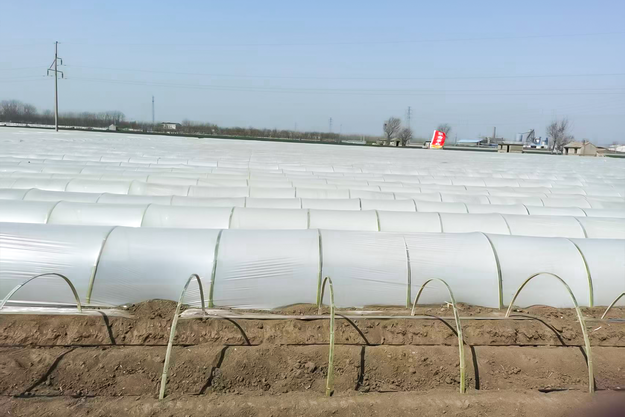
Onedayone's tale began in Yantai, in the Shandong province, China's top ginger growing area. They have a branch in Zhangzhou, in the Fujian province, too, where pomelo cultivation is strong. Maggie explains that, in China, horticulture still relies largely on small-scale growers. "Onedayone isn't a grower, but it manages the cultivation by working closely with mostly older, rural, small-scale growers. We teach those growers the best cultivation techniques and the standards they must meet regarding fertilizers and crop protection products. That's crucial for those wanting to enter the European market," she says.
 © Onedayone Group
In China, all land is state-owned. In other words, growers cannot sell the land they cultivate, which explains why there is no concentration of growing companies like in Europe and other parts of the world. "Though we cannot grow everything, we do maintain full control over the chain, from seed to delivery to international clients. Nothing is left to chance. We know how important respecting MRLs is to selling to Europe, and we were one of the first Chinese exporters to introduce residue-free ginger cultivation in China. Growers get higher prices for that, too. It did, however, take a while to get everyone on board with that idea."
Consumer-driven
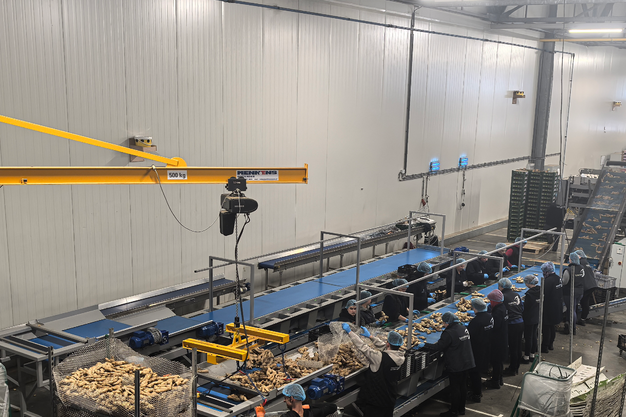
Ginger has always been included in most Chinese cuisine. "Ginger is now gaining popularity in the West, particularly because of its health benefits. Our rising exports are, therefore, completely consumer-driven, which strengthens our goal to grow by 15% annually in the European market. There, around 40% of ginger comes from China, 25% from Peru, and 20% from Brazil. And of every five pieces of Chinese ginger in Europe, Onedayone markets one," Maggie explains.
 © Onedayone Group
She says Chinese ginger is a brand of its own. "People know China is the birthplace of this special rhizome. What's more, this lovely product is great value for money. Our supply for Europe goes solely to the fresh market. Our intensive grower support means the quality is too high to divert the ginger to the processing industry."
Price fluctuations
As a "born export company," Onedayone focuses exclusively on the Middle East and Europe, even when the local market occasionally outperforms those overseas destinations. "Supply and demand movements sometimes cause price fluctuations. That's because price situations often guide growers in their crop planning. If the grower price for a crop is high, it's not uncommon for them to increase acreage the following year. That then usually results in a higher market supply and lower prices. As an export company, however, Onedayone has its sights set on the long term, and we don't let short-lived local market opportunities distract us," says Peng.
 © Onedayone Group
Knowledge of the Western culture
But export market fluctuations create challenges too, especially logistically, she adds. "Sea freight costs and durations are volatile. Nonetheless, even in the most unpredictable months during the pandemic, we managed to fulfill every order from our loyal buyers. That's thanks to our branch in the Netherlands, where strategic stock and an accessible contact point kept trade flowing smoothly. It still does."
 © Onedayone Group
"Shorten the distance – and, I don't just mean the physical distance – to the customer, and you immediately remove many obstacles. For a Chinese company to be successful in Europe, it must be willing to understand Western culture and communicate with clients in the right way. That might still hinder many Asian exporters, but we're certainly doing our utmost to circumvent that," Maggie concludes.
This article was previously published in Primeur May 2025. Click here for the link to the entire edition
 Voor meer informatie:
Maggie Peng
Onedayone Group
Tel: +86 18717865462
[email protected]