The apple season has been marked by the low supply in Europe and smaller-than-normal average sizes, especially in some varieties. At the moment, the bicolored and red varieties are practically sold out, as the campaign has finished even earlier than usual. In the case of the Golden and Granny varieties, the stocks available are just enough to keep them on offer until the start of the next season.
 © Joel Pitarch | FreshPlaza.com
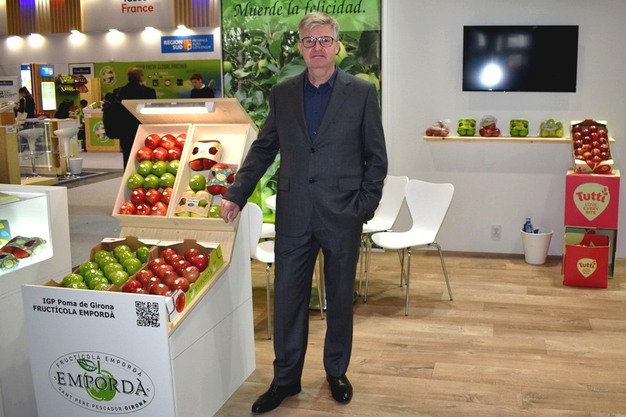
"The production shortage has led to an increase in prices for the industry, as well as a higher base price compared to other seasons," says Miquel Roig, Managing Director of Fructícola Empordà, a company located in Sant Pere Pescador, in the Spanish province of Girona. "Many second-class batches that couldn't be marketed fresh have gone directly to the industry, which has helped decompress the fresh market and contained the downward pressure on prices."
"As for prices, they can be considered correct, although not particularly remarkable," says Roig. "The turnover of growers will significantly depend on the calibers and qualities obtained by each." According to the grower and marketer, work has been difficult due to the low supply of large calibers. "It has been necessary to make greater efforts in sorting and have more export-oriented packaging, freeing up smaller sizes to keep stock levels balanced."
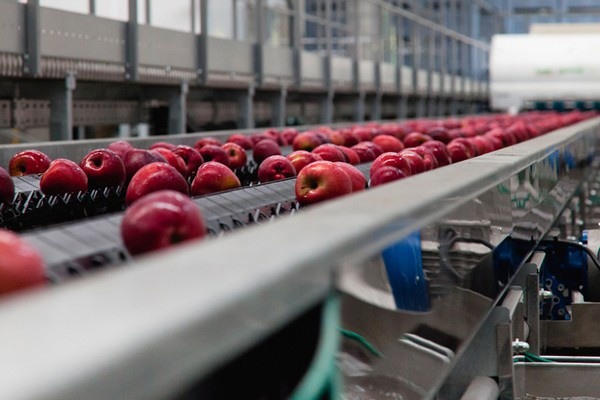
Currently, Fructícola Empordà, which belongs to the PGI Poma de Girona, is producing and selling around 26,000 tons of apples a year and aims to gradually continue increasing this volume in the coming years.
 © Fructícola Empordà
The next harvest in Girona will begin in early August, starting with the Gala, which is the earliest variety. According to Miquel Roig, initial forecasts point to a drop in production:
"At the moment, it is still too early to have fully reliable data on the next harvest. However, in the Girona area, we can already anticipate that the number of fruits per tree is lower than last year. We will have to wait to see to what extent this lower load results in larger sizes, which could partially mitigate the reduction in total volume. In any case, everything points to a slightly lower production, especially for the Golden variety."
There is a chance to grow with club apples in Spain, but only if these add real value
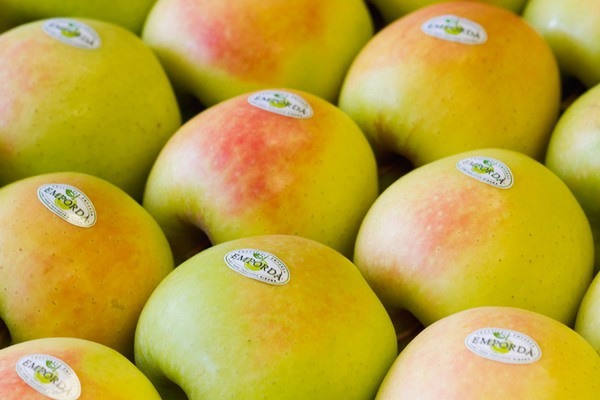
Several varieties are grown under the label of the PGI Poma de Girona, including the Golden Delicious, Gala, Red Delicious, and Granny Smith. Other varieties, such as the Fuji and various club varieties, are also grown, depending on the commercial strategy of each of the companies.
"We are continuing to focus on innovation and differentiation, which is why we are expanding the acreage planted with the club variety Tessa and also incorporating new varieties from the Fruit Futur improvement program, of which we are founding members. These include the Tuti and, as a novelty this year, we have pioneered the planting of the HOT A003 variety, which will soon have a commercial name," says Miquel Roig.
When asked if there is room for growth in the club variety segment in Spain, Roig says that "it depends on how the club concept is understood. If we are talking about the model of 15 years ago, when the value resided mainly in the name and marketing, there is likely little chance, as this approach has already been exhausted."
 © Fructícola Empordà
"However, if we are talking about new varieties that add real value to the product, whether it is higher productivity, better post-harvest shelf life, a more attractive appearance, or agronomic adaptation, then there is clear room for growth, as that's the way the market is moving towards. Differentiation based on quality and productivity is key to the sector's competitiveness," he says.
"Plenty of room for improvement to increase the market share of domestic products"
According to available data, consumption of domestic apples in Spain has stagnated in recent years. "Despite this, it is important to mention that Spain is a country with a deficit in apple production, so a significant part of its consumption is covered by imports. This shows that there is plenty of room for improvement to increase the market share of domestic products," says Miquel Roig.
"It is essential to work on raising consumer awareness so that, whenever possible, they prioritize the purchase of apples of domestic origin, thus supporting the local growing sector. Also, apples continue to be one of the cheapest fruits on the shelves, which gives them a key competitive advantage," he says.
"Added to this is the great effort made by growing companies in varietal reconversion and in the improvement of storage and packaging infrastructures, which is allowing them to offer higher quality, more homogeneous and attractive fruit to the consumer. These continuous improvements in quality and presentation should contribute to boosting the consumption of domestic apples in the future," says the General Manager of Frutícola Empordà.
 For more information:
Miquel Roig i Heras
Fructícola Empordà
C/ Dr. Narcís de Ciurana, 12
17470 Sant Pere Pescador, Girona. Spain
Tel.: +34 972 52 00 00
[email protected]
www.fructicolaemporda.cat