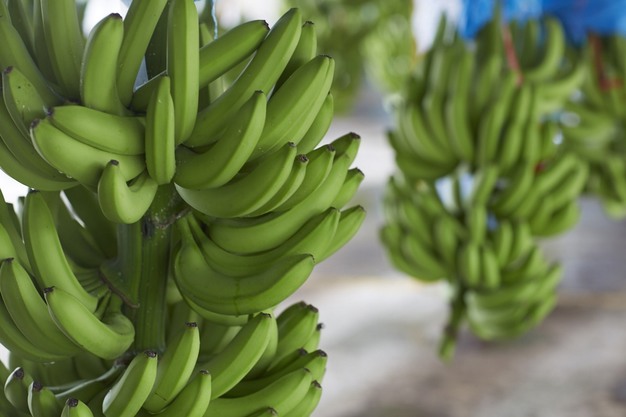
"We've focused on being more efficient, that is, on producing more in the same area. This approach sums up the strategy of the Costa Rican banana sector, which has kept its cultivated area at about 42,000 hectares for more than 15 years, prioritizing productivity over expansion," stated Omar Sánchez Rojas, Corbana's head of business intelligence.
 © Corbana
In 2024, exports totaled 125.5 million boxes, a 1.1% decline from 2023, attributed to "an inferior rainfall distribution." For 2025, Sánchez forecasts a drop of around 5% compared to 2024. There will be a deficit in the first half of the year due to "the high rainfall in November and December, which affected the balance between humidity and precipitation necessary for good production." Producers hope the second half of the year will mitigate part of the decline so far.
There is a slight shortage of bananas in the international market, which contributes to keeping the European price at around $ 18 per box, "about one dollar higher than on the same date of 2024," Sánchez said. Costa Rica remains focused on its main markets: the European Union, which absorbs 47% of exports, the United States (33%), the United Kingdom (9%), and other markets (mainly in the Middle East, such as Saudi Arabia and the United Arab Emirates) that account for the remaining 11%. "We are also interested in some other markets, specifically Eastern European countries," he added.
 © Corbana
Sánchez also spoke about the situation in Panama. "Historically, when a country has problems with its exports, others fill that gap." "So far, we don't have information to know if the market is compensating with fruit from other sources. Costa Rica is coming out of a period of low exports," he stated. "However, when there is an imbalance in one part, the market tries to balance itself with produce from another part," he acknowledged.
"I'm concerned about the events in Panama and hope they can find a solution soon," he stressed. Trade will adjust, but Costa Rica knows the importance of stability in all producing countries for the general well-being of the regions that depend on banana trade.
There are some challenges on the horizon. Prices paid to producers reflect a long-standing challenge: "For many decades, bananas have been the cheapest fruit in supermarkets. This has to change. Banana prices have not been adjusted in real terms, as the price of other fruits have," Sánchez stresses. If prices aren't adjusted, complying with the market's growing environmental and social demands will be unsustainable. "We agree on all issues related to sustainability, better wages, and taking care of the environment. However, we've always stressed, all links of the supply chain must share this responsibility. That includes supermarkets, which so far have not had a decisive position, and consumers.
 © Corbana
The Fusarium race 4 Tropical (R4T), a disease that threatens plantations, is another challenge. "Those of us who do not have it must continue to work to contain its arrival in our plantations," Sánchez stated, stressing the urgency of developing resistant varieties and cooperating between countries.
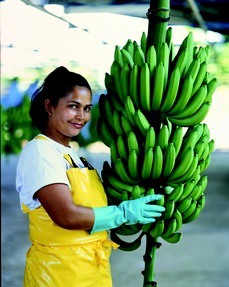
Despite the difficulties, the Costa Rican banana sector is resilient and continues to be an engine of employment and development. "The banana sector generates 42,000 direct jobs and about 100,000 indirect jobs in the Huétar Caribe region, accounting for 76% of employment in the area. The revaluation of the Colón has made us less competitive, but we've made a great effort to maintain the workforce," Sánchez stressed.
"Costa Rica is committed to sustainability. We've been working on it for more than 30 years, recycling, reducing our water use, and having 14,500 protected hectares. However, there's always room for improvement," Sánchez concluded.
 For more information:
Omar Sánchez Rojas
Corbana
Costa Rica
Tel.: +506 4002 4716 / +506 4002 4714
Email: [email protected]
www.corbana.co.cr