Aid Al Adha is one of the most important dates of the Islamic calendar, and it is on this occasion that Muslims observe the ritual of sheep sacrifice. This year is exceptional in Morocco, as Aid Al Adha will be celebrated without sacrifice, in line with a call from the King of Morocco to preserve the national herd at a time when the country is going through a long period of drought.
 © Youness Bensaid | FreshPlaza.com
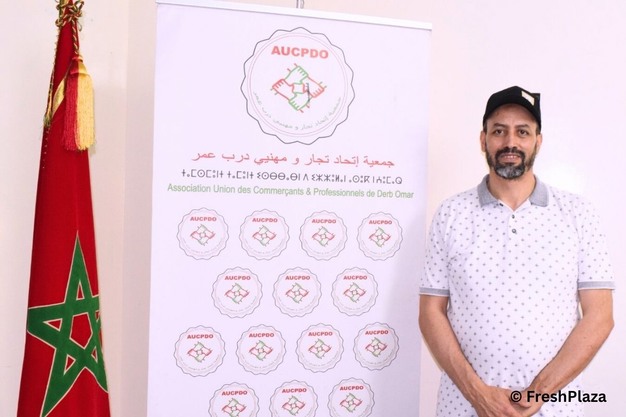
The economic impact on the rural world is enormous, as this occasion represents the main commercial window for livestock farmers. A number of other sectors are also involved, including onions, dried fruit, and spices. Said Farah, general secretary of the Union of Traders and Professionals of Derb Omar, Morocco's largest wholesale market, describes how traders are coping with this situation.
The traders' representative begins by describing the Derb Omar market, which is fairly representative of the wholesale sector in the entire country. He says, "The famous Derb Omar market is the largest wholesale market in Morocco, with over 40 thousand traders and 10 thousand shops spread across Derb Omar area in Casablanca. It has more than 75 commercial centers covering 60 trades all sectors combined. In the agricultural sector, our trades cover machinery and tools, agricultural inputs, seeds, dried fruit, spices, and more. Nearly half of our members are also importers, and Derb Omar is the artery of the entire national market, with over 240 containers a day serving the market or delivering to other Moroccan cities."
 © Youness Bensaid | FreshPlaza.com
The call of February 27 not to perform the sacrifice is justified, according to the royal communication, by "the climatic and economic challenges facing our country, which have led to a significant drop in the headcount of livestock." Farah comments: "This is a very wise decision which comes at a time of unbearable inflation, while drought had the best of livestock breeders. Observing the sacrifice ritual threatens to end the national livestock. The decision has been greeted with relief by many families across the country, and we traders are well aware of its importance," Farah adds.
"That said, there's no denying the effects of the ritual's cancellation on many wholesalers who depend on the seasonality of this holiday, which accounts for a large proportion of their annual sales. We're already seeing stagnation in several sectors, accompanied by falling prices that are even denting wholesalers' capital. It's important to remember that while margins in the wholesale industry are low, price cuts and losses can be enormous."
 © Youness Bensaid | FreshPlaza.com
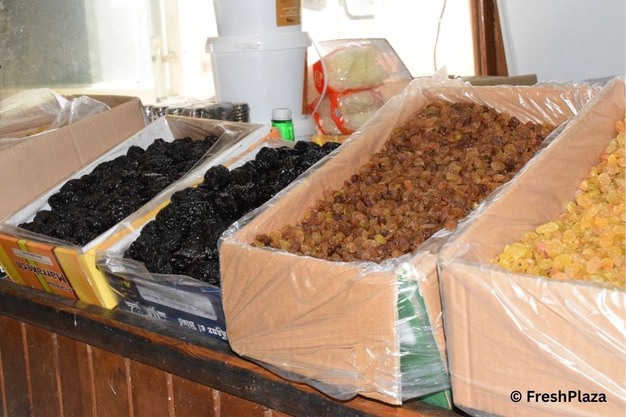
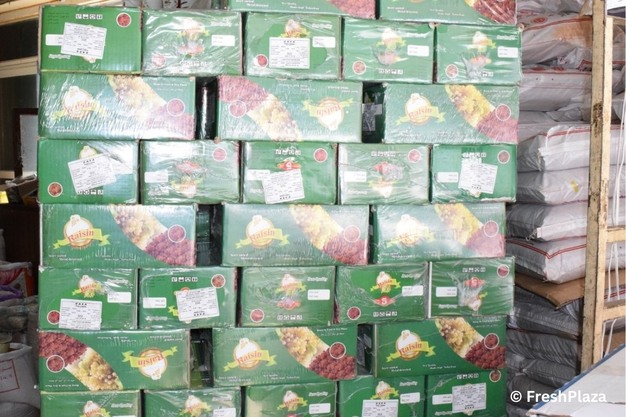
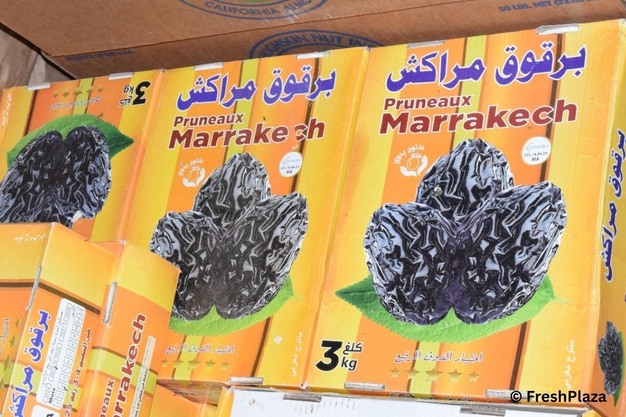
According to the wholesalers' representative, the main products affected in the agricultural sector, and present on the Derb Omar market, are spices, dried apricots, dried plums, raisins, ginger, and pulses.
As one spice wholesaler explains, "Almost 90% of our spices are imported from India, and the bulk of pulses and other products such as nutmeg and ginger are imported from Egypt. The sector is currently in a state of stagnation, as many traders have already imported their stock for Aid Al Adha at high prices. Prices collapsed after the announcement, and losses are up to 3-4 MAD per kilo (1 MAD = 0.1 EUR), and I'm talking about losses in capital, not missed profits. Losses are up to 20 MAD per kilo for some products."
 © Youness Bensaid | FreshPlaza.com
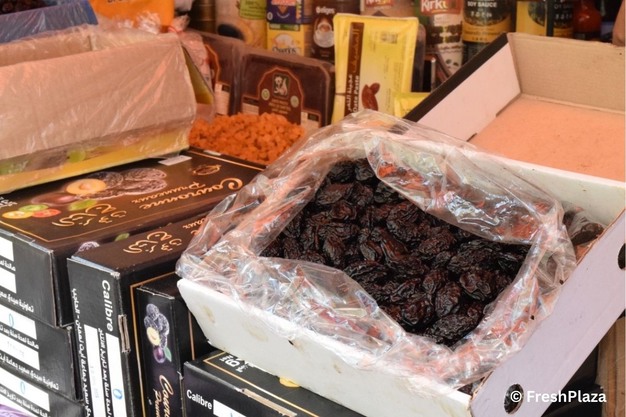
A wholesaler of dried plums, apricots, and raisins says: "Prices for dried plums have fallen from 60 MAD last year to 40 MAD this year for the best grade, which consists of large sizes, high BRIX, and wrinkled skin. Prices have fallen by around 15 MAD per kilo for the lowest quality. The price drop is more significant for dried apricots, reaching 50 MAD per kilo. The Al Adha window represents a significant share, up to 50%, of our annual sales in terms of volumes." The same wholesaler adds that the damage is less severe than for spices, as dried fruit is supplied locally, mainly by processors in the Meknes region, and traders have been able to avoid buying excessive quantities.
Another wholesaler of dried plums, apricots, and raisins comments: "We wish the announcement had been made earlier so that we could prepare ourselves better. Part of our supply of dried plums is imported, those with smooth skins, and they are usually in great demand in northern Morocco. Overall, prices held steady the week following the announcement, then fell by around 35% and have stayed low since then. The current situation is that supply far outstrips demand, and major losses are to be expected as the product's shelf-life is 3 to 4 months maximum. We hope that prices will improve as soon as possible."
 © Youness Bensaid | FreshPlaza.com
Farah, for his part, concludes: "The damage is greater for other traders, for example, those who have imported whole containers of small tools, especially for the day of sacrifice. As we have a representation mandate and a responsibility, it's our duty to speak out about their distress. But from another point of view, we are aware of the importance of canceling the ritual this year to curb inflation, which also affects us and our fellow citizens' purchasing power."
For more information:
Said Farah
Union of Traders and Professionals of Derb Omar (AUCPDO)
Tel: +212661763854