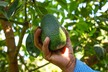
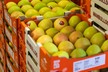
Senegal has four mango-producing regions: The north, south, center, and Niaye. While the Niaye region accounts for the bulk of national production, the southern region opens the season with the earliest harvests from Sédhiou, Goudomp, Djibanar, and Birkama.
Last season, In 2024, a delay in flowering in the southern regions, caused by bad weather conditions, led to a delayed start to the campaign, and ultimately to commercial difficulties for Senegalese exporters. Senegalese growers found themselfs in a fierce competition with Egypt and Latin American origins, pushing prices down. This season, it seems that growers are not out of the woods yet.
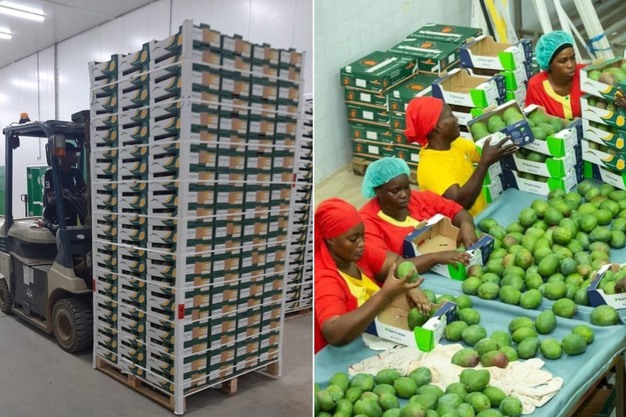 © Potentieel
Amadou Ndiaye Seck, grower and exporter, says, "We don't know yet when the season will start. We are noticing a lack of homogeneity in fruit maturation. Climatic conditions have been unstable, with frequent temperature swings that have lasted until now, slowing down fruit ripening."
Growers also continue to face the problem of fruit flies, according to Seck. "There is a delay in covering the cost of traps and baits for fruit fly control by the government," he says.
Last season was the third in a row to record lower mango volumes in Senegal. However, Seck hopes that the 2025 season will break with this situation. He says: "We are expecting record production this season, with very good quality, despite the uncertainty at the start of the campaign."
The Niaye region, where harvests usually begin in June, accounts for the bulk of national production, or nearly 70% according to Seck. Across all regions, the first harvest of the season accounts for a quarter of annual volumes, while the second harvest accounts for the bulk of the season's volumes.
For more information:
Amadou Ndiaye Seck
A.N.S Inter-Export
Tel: +221 70 645 54 95
Email: [email protected]