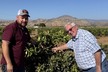
Tiaan Snyman is an agricultural advisor in the old-fashioned sense he says, encouraged by the old guard of the Lowveld citrus industry, people like James Warrington, who impressed upon him the importance to farmers of disinterested advice.
"I base my consultancy on the producer's profitability. In the extremely competitive markets to which we export, quality will become more important. The days of simply farming for volumes are numbered," he says. A box of fruit has to be just right in every respect.
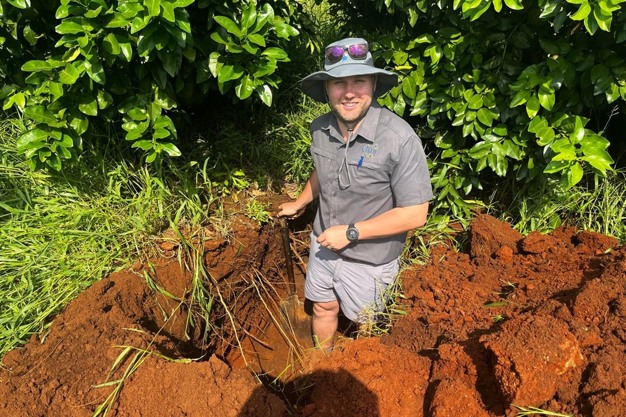 © Tiaan Snyman | Principle Agri
Tiaan Snyman
Through soil, nutrition, and irrigation choices, he believes he can directly improve a farmer's profitability by maximizing the number of marketable cartons while simultaneously keeping a close watch on costs.
"The pressure that costs exert has increased tremendously over the past five years. At times, we tend to neglect the basics like irrigation and pruning and attempt to fix everything with 'wonder products'," he says.
His seven years as technical manager of Indigo Farming, operational division of the ANB Investment Group (owner of the ClemenGold and LemonGold brands) has convinced him that you can't go wrong with a back-to-basics approach.
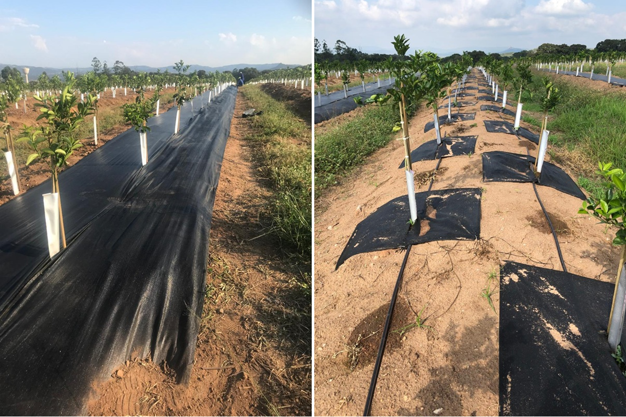 © Tiaan Snyman | Principle Agri
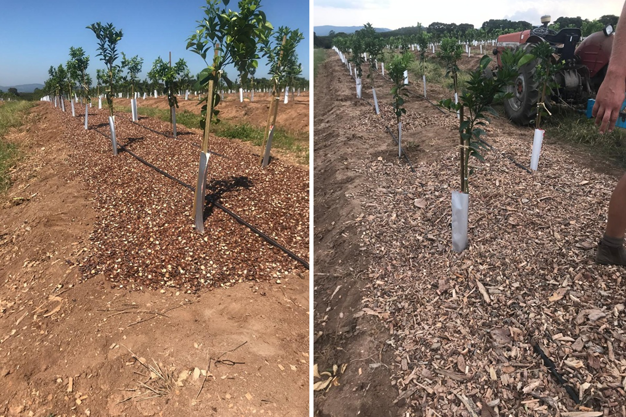
Trials with various forms of soil cover
Value in an independent voice
Snyman, a trained soil scientist, observes that as multinationals' spheres of influence increased, they have subsumed many independent and experienced technical consultants. Naturally, the sales imperative colours recommendations.
He's visited many farms recently where the harvest had been delayed by the rain remaining unusually long over the summer rainfall areas. It will doubtless have an impact on the early soft citrus varieties, he says. Should it continue into coming weeks, when summer rainfall usually would have stopped, it could be problematic especially to sensitive cultivars like lemons, clementines and Novas.
He cautions: "Rain always goes hand in hand with quality challenges, during both pre- and post-harvest."
In the north of the country, most Satsumas have been harvested, with clementines and Novas next in line. "It looks like a good year for most farmers, more or less the same number of cartons as last year."
 © Tiaan Snyman | Principle Agri
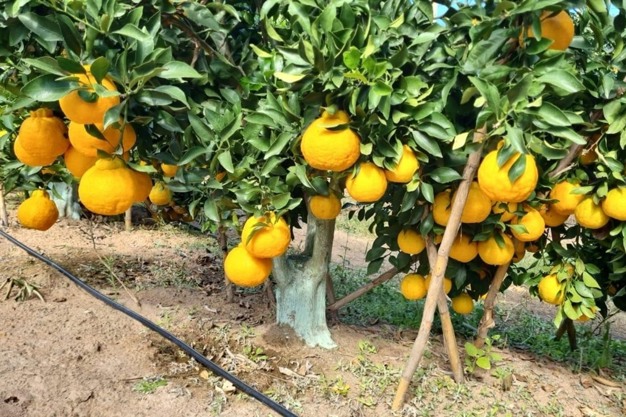
Guilietta, an interesting new dekapon type owned by Sunworld, marketed as Sumo Citrus in the US
Greener to farm citrus for East than Europe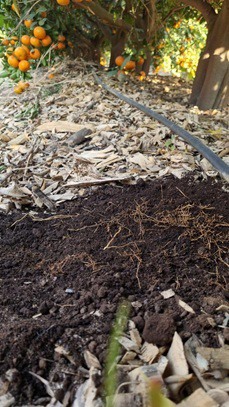 © Tiaan Snyman | Principle AgriHe is based in Nelspruit, a humid subtropical area with high disease pressure, where he works closely with entomologists and plant pathologists.
Right: a combination of wood chips and compost ensuring healthy roots
Many Lowveld growers farm for the Middle East and Far East, and not for Europe, because they get a lot of citrus black spot. Eastern countries have a greater tolerance for citrus black spot, meaning fewer chemical sprays: it's more environmentally friendly to farm citrus for the East than for Europe.
On the one hand, Europe avows an intention to reduce the worldwide reliance on agricultural chemicals.
On the other hand, it has made a cosmetic blemish on citrus peel (unaffecting the flesh) the hill they are prepared to die on.
"Sure, you don't want to transmit a disease to a country where it's not present – but our subtropical climate with high citrus black spot pressure is unlike any climate in Europe," he says. CBS was first detected in South Africa in 1929. He's not a plant pathologist, he says, but the industry knows that if left unchecked in their subtropical climate, the fungus could seriously affect an orchard.
Pathologists believe it is very unlikely that fruiting bodies (pycnidia) of the CBS fungus on the export fruit itself could ever transmit the fungus. In a study conducted by the CRI (Citrus Research International), the South African citrus industry's research division, the combination of postharvest treatments, cold storage, and wax coatings effectively controlled latent infections and completely inhibited the release of spores from fruit and peel segments.
A greater chance is of infected plant material making its way through improper channels carrying the disease to EU citrus producing regions.
 © Tiaan Snyman | Principle Agri
Macadamia shells and chipped bark tested in young orchards
Snyman continues: "Billions of rands go into controlling black spot, and I'm not only talking about the chemical applications: it's the amount of diesel powering the sprayers and the tractors, it's the labour required…"
The Sisyphean battle against the fungus that causes the black spots is set to become even more difficult, if not this year, then next.
Mancozeb, a dithiocarbamate fungicide, forms the basis of most South African citrus growers' black spot programme. Snyman says he doesn't think there's anyone in the summer rainfall areas who has had the courage to follow a mancozeb-free programme for many years. As a result of fungicide resistance building since the early 1980s, mancozeb and strobilurin programmes became the standard in the early 2000s and he says it's still the most reliable tool during high CBS pressure years.
The allowed maximum residue level of mancozeb is currently 5mg/kg. A change is expected in the first quarter of 2026 until it is eventually banned, as the industry expects. As for alternatives, he says, no one is yet comfortable that a combination of reliable alternatives exists to take over mancozeb's function.
The irony of banning active ingredients
Another concern, and one that in his opinion neatly illustrates the unintended consequences of theoretical decisions forced upon the messiness of real life, is the recurrent suggestions to ban imidacloprid, a neonicotinoid insecticide. "Imidacloprid protects us against African greening disease. It is critical for farming citrus."
The banning of imidacloprid has been mooted in the past, but for the moment it's still available for use. "The European Commission has reconfirmed its intent to lower the EU Imidacloprid MRL to 0.01 mg/kg, but the procedure has been stalled," the CRI remarks.
If imidacloprid is phased out, he believes, and entomologist colleagues agree with him, it will be very bad for the Lowveld and other areas that have African greening (like the South Cape). Imidacloprid is a systemic product that targets sucking insects, like the vector of African greening disease, a psyllid, as well as red scale. And should Asian greening disease or huanglongbing, the dreaded one, ever arrive in South Africa, this could well prove invaluable against that psyllid too.
Not being a broad-spectrum insecticide, but one that is translocated through the plant's tissues over successive growth flushes, it greatly reduces the need for sprays throughout the season, which, he says, reduces its impact on the wider ecology.
He stresses that he is not a plant pathologist, but the irony doesn't escape him when the removal of a hazardous chemical results in increased spraying. "There are better ways to farm 'greener' than through banning active ingredients."
Heavy costs to chasing perfect-looking produce 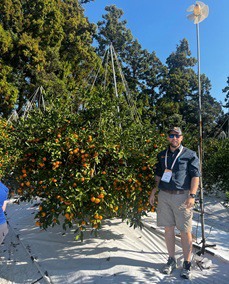 © Tiaan Snyman | Principle AgriThe creation of unrealistic consumer expectations has to be recognized as a driver in the "excessive spraying for pests that cause little more than cosmetic damage."
He calls it a frustrating paradox: "While markets increasingly demand reduced chemical use, they simultaneously expect fruit to be visually flawless."
Right: the well-tended mandarin tree: Snyman at the International Citrus Symposium in South Korea, November 2024
An entomologist, fellow independent agricultural advisor Adriaan Serfontein, strongly feels that a bit of thrips scarring should be seen as "a badge of honour, a sign that the farmer chose environmental responsibility over chasing perfect-looking produce."
Considering the pressure bearing down on farms from a sustainability point of view (and rightly so) Snyman observes that the massive scale of food waste after it leaves the farm as well as the ubiquity of plastic packaging merit equal energy and attention as they are pouring into the soil. For more information:
Tiaan Snyman
Principle Agri
Tel: +27 84 548 7772
Email: [email protected]