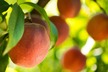
A deep freeze in the Northwest United States has led to a reduced pear harvest, marking the smallest crop in four decades. Growers report a yield of only two-thirds of the previous year, a 31% decrease from the five-year average. The Bosc variety, known for its baking suitability, experienced the most severe impact, with production dropping over 60%.
Approximately 80% of U.S. pears originate from this region, and experts anticipate a reduced presence of pears on grocery shelves. Jon DeVaney, president of the Washington State Tree Fruit Association, noted, "There's certainly still a Northwest pear crop, but it was significantly smaller as a result of that damage."
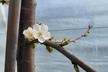
The affected pears are expected to exhibit "russet," a brown ring caused by frost-damaged blossoms. While taste remains unchanged, appearance may deter consumers. DeVaney remarked, "Consumers eat with their eyes before, before anything else."
Climate change poses additional challenges, as pear production is sensitive to extreme weather. Research indicates flowering times for pears have advanced by about 11 days over three decades, complicating management. DeVaney highlighted the cascading issues related to altered flowering times.
Growers are increasingly reliant on technological solutions due to unpredictable weather. Washington State University has installed over 160 weather stations for real-time data and is developing AI-based models for improved forecasts. Despite NOAA's predictions of a colder, wetter winter in 2025, current conditions are warmer, which may benefit pears. DeVaney expressed cautious optimism, noting, "There's a lot of grower intuition that whenever you have a smaller crop, usually the next year, the trees might have a larger crop on them."
Source: Food Dive