There's more supply than demand for onions right now. "Mexico has a big crop and they've started crossing, though the beginning of the yellow onions are marketed as sweet onions which is a different category," says John Harris of Paradigm Fresh.
There also seems to be a good Canadian supply of onions this year and a large supply of Peruvian onions. There is also still a good supply of domestic storage crop onions. "With all of that, we have a very depressed yellow onion market which is most of it and below the cost of production while the red and white onion market are hanging in there at profitable levels," says Harris.
He adds that the quality on Mexico's onions is good and some quality issues are starting to emerge on Washington, Idaho and Oregon product as they can do at this time of year though quality issues get cleaned up before shipping.
As for demand, for most of January, it was very good though towards the end of the month, it slowed down somewhat. However, this is typical for the end of January and into early February. "The daily USDA shipments show we're still hanging in–last Friday was a big shipping day with 473 loads. Now though we're hanging around the high 300s," says Harris.
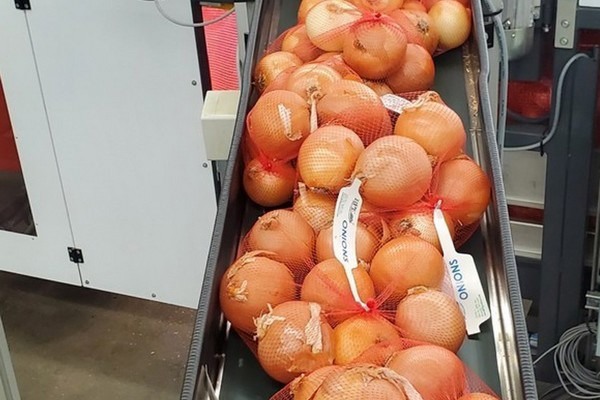
Yellow market should stay as is
So where does that leave things looking ahead? The yellow onion market isn't expected to get better with the earliest price relief coming likely in May. The white onion and red onion market have an opportunity to hold, though it may weaken slightly over the next week or two as more imports arrive from Mexico.
What about tariffs? As of February 1st, President Donald Trump is expected to implement tariffs on both Mexico and Canada for as high as 25 percent per country on their goods exported to the U.S. "There's a belief that at this point, it's going to be treated like an input cost because that's what it is," says Harris. "The market doesn't care what the input costs are. The market dictates what it's willing to pay so it's quite possible that they're going to lose 25 percent more money. That's not to say that over time, the market will need to react to tariffs. Unfortunately, that means the costs, generally speaking, get transferred to the consumer."
 For more information:
John Harris
Paradigm Fresh
Tel: +1 (970) 775.2049
[email protected]
www.paradigmfresh.com