These days, dried fruit and nut wholesalers must be total suppliers. That is what Alco Kappé of the Flemish company Allnuts thinks. He celebrates 30 years as an independent businessperson in the sector next month and sees unburdening his customers becoming increasingly important. "We take care of everything for our clients, and simply put, all they have to do is find consumers," Alco begins.
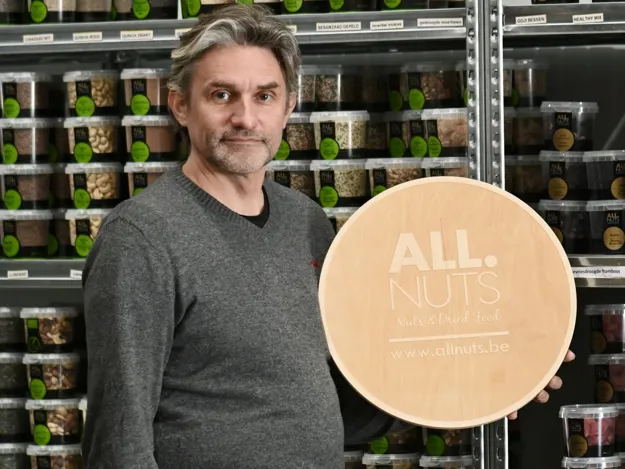
In 1993, the experienced trader took the step from market vendor to start his own business. "I wanted to see the result of putting extra effort into something. My then boss said I should go into business for myself, so I did." Alco decided to trade in the product group he was already marketing: nuts and dried tropical fruits.
"About 11 years 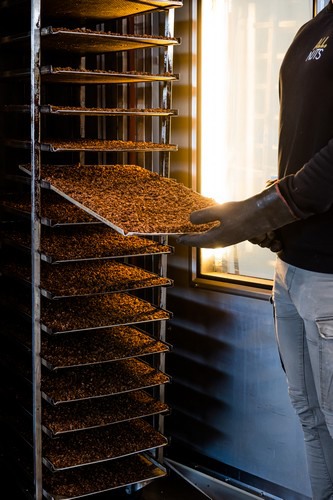 ago, a new situation arose, and we later joined Group A. De Witte. I can now say Allnuts made the right choice because we keep growing annually," he says.
Granola and Nuts
What is the trick to Alco's steady growth through all these years? "It's mainly, I think, a matter of adapting to what the market demands and does. We keep up with developments in certain products."
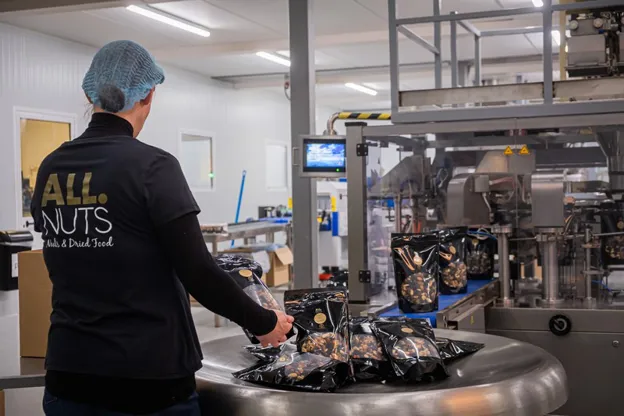
"As well as packaging and flavors. For example, granola and roasted and spiced nuts are increasingly popular. We have everything in-house for that - 300 different raw materials for making granola," says Alco.
"We mix those per buyer specification, which we now do for several private labels. So we take care of the whole package. They only have to find customers. We take care of the stock, production, and logistics. We may be doing it differently than others, but it seems to be working."
The pandemic
Allnuts, too, survived a turbulent time when the pandemic upended everything. "Things were complicated, and nobody knew what to expect, but I felt, from the beginning, that it would be tough. Think of it as a pipeline. As soon as that begins to sputter, either too much or too little emerges, making things very expensive," Alco explains.
"Or a big blockage forms, leaving nothing at all. We quickly responded by adjusting our inventory and ensuring our delivery channels were stocked. That meant we could keep guaranteeing continuous deliveries in almost all cases. The advantage here was also that we have everything in-house."
"We only had to sometimes switch gears regarding raw material (fruit and nut) purchases. It then helped to have been in the business for some years. We don't work solely with supplies from Belgium, but also, for instance, local importers worldwide. Then you look at who has what and where. If something isn't up to standard, you can move on to another supplier. Continuity is paramount. If that and your products' quality is always right, people will keep coming to you," says Kappé.
Clean labels
The pandemic also somewhat increased consumers' awareness of healthy products and health in general. "Since then, the health story has been pretty hot. Demand definitely rose, as did demand for larger packaging. And this awareness didn't suddenly diminish after the pandemic either."
"Now, 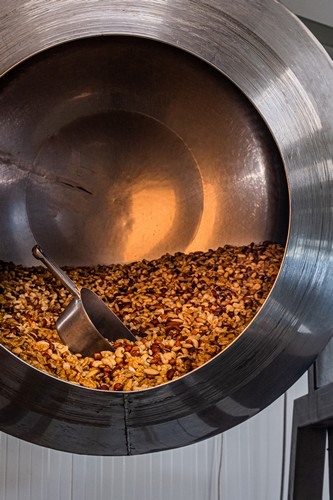 for example, more and more people realize they don't know exactly what they're eating. They buy something, but the label has unfamiliar words or logos," Alco continues.
Allnuts, thus, wants to focus on changing that. "We, and several customers, are designing something new: clean labels. Some chocolate bar labels, say, list all kinds of additives entirely unknown to people."
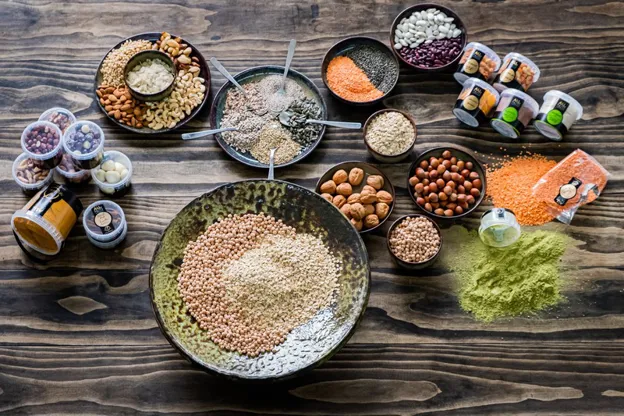
"We want to keep it straightforward. Simply put: a label with an ingredient list. Maple syrup, spices, and nuts, that's it. Then you know exactly what's in a product. We're working on more projects to capitalize on that consumer health aspect," Alco states.
Organic keeps growing
He primarily supplies the Belgian hospitality sector and higher-end specialty stores. "People visit these stores in search of a specific range. They've already made their choice. That's part of our philosophy: continuously supplying the same trusted quality. Shoppers know what they're getting, and we ensure their store always carries the same product."
That is why the organic share at Allnuts keeps growing. "That share's fairly large, and it continues growing. That's also because of the category of customers we work with. If I switched to the market, I'd not get the same results. People won't visit your stall specifically for their nuts. When shoppers go to a store, they know what they want," says the dried fruit and nut wholesaler.
"So it's not a problem if organic, for instance, costs a euro more. There's less growth than in the beginning, but that's logical. People who consciously choose organic keep coming back. And every year, people who see the benefit join in, but that movement is smaller."
Economic situation's effect
Yet, Alco sees across the globe, people are struggling to buy pricier items like dried fruit and nuts. "In the last 18 months - with the economic story and the pandemic's impact - we've noticed that people worldwide can't always buy more expensive fruit or, for instance, cashew nuts anymore. That's, thus, barely being eaten in certain countries anymore, and when demand stagnates, trade stops. That's why many cashew producers have stopped; they have to work at cost price," he says.
"Shoppers are also turning to cheaper peanuts, which are currently very much in demand. That, in turn, has consequences. This year's harvest was significantly disappointing, but with our stock as is, we still have to continue until May 2024; supply simply cannot keep up with demand. Peanut prices have, thus, also risen sharply."
"That won't change before early next year either. So, the massive switch to peanuts is causing those prices to rise. It's hard to predict what will happen with that next. I've been in the business for 30 years, and something different happens every year. That's also what makes it a lot of fun," Alco concludes.
For more information:
Alco Kappé
Allnuts
1038 Industrieweg
3540, Herk-De-Stad, BE
Tel: +32 (0) 135 50 559
Email: [email protected]
Website: www.allnuts.be